BUYING GUIDE · 10 MIN READ · UPDATED SEPTEMBER 2026
Table of Contents
The short answer: when you evaluate a custom ceramic pet bowl supplier, three things matter more than price — (1) verified lead and cadmium compliance with test reports you can actually read, (2) real customization depth, meaning in-house sampling and design capability rather than a logo printed on a catalog item, and (3) production control, shown by a documented ten-stage manufacturing process with inspection gates you can audit. Get these three right and everything else — price, MOQ, lead time — becomes negotiable detail. Get them wrong and no discount will fix a failed lab test or a late Q4 shipment.
Since 2010, our team has designed and exported pet products — including custom ceramic bowl lines — to importers, pet brands and retail chains in 30+ countries. This guide condenses the questions serious B2B buyers ask us before their first order — and the answers that separate a dependable ceramic supplier from a trading middleman.
Section 1/8Material & Compliance First
If you only verify one thing about a ceramic pet bowl supplier, make it this one.
Lead & Cadmium-Free Glazes: What to Ask For
Ceramic itself is inert. The food-safety risk sits entirely in the glaze and decoration. Cheap glaze systems or low-grade decal inks can release lead and cadmium into food — and for pet food, the same standards apply as for human tableware in most markets.
What a serious manufacturer should provide without hesitation:
- Third-party test reports (SGS, Intertek, TÜV or equivalent) for lead and cadmium release, issued within the last 2 years.
- Reports tied to the actual glaze and decal system used on your bowls, not a generic “ceramic category” certificate.
- A commitment to retesting whenever the glaze color or decal changes — this is where many low-cost suppliers cut corners.
Verbal “food grade” claims are not compliance. Ask for report numbers and verify them.
FDA vs LFGB: Which Standard Does Your Market Need?
- United States: FDA food-contact requirements, plus California Proposition 65 if you sell into CA retail channels.
- European Union: LFGB and the EU ceramic food-contact limits — generally the stricter of the two.
- Selling both markets? Test once against LFGB and you are covered for both. This is the advice we give most of our customers.
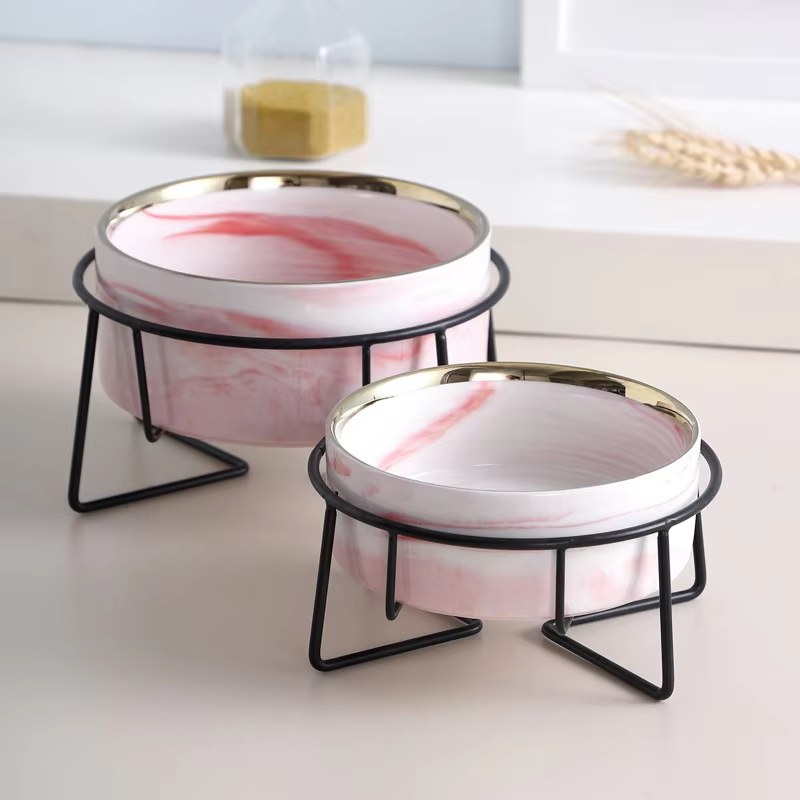
Related: See our marble ceramic bowl series
Section 2/8Customization Capability: OEM vs ODM vs Private Label
“Custom” means different things to different suppliers. Before comparing quotes, align on which level you actually need:
- Private label — the manufacturer’s existing mold, your logo and your packaging. Fastest route to market, lowest MOQ, but the product itself is shared with other buyers.
- OEM — existing or lightly modified molds with your custom decal artwork, glaze colors, sizes, and packaging. This is the sweet spot for most pet brands building a distinctive line.
- ODM — a fully custom shape, which means a new mold. Mold fee and mold lead time are quoted per design, and exclusivity terms should be agreed in writing.
The Sampling Process, Step by Step
A transparent sampling workflow is the fastest way to judge a supplier’s real capability. Ours runs like this:
- You send artwork, a reference photo, or a physical sample.
- We confirm specifications: diameter, height, weight, wall thickness, glaze color, decal placement.
- First sample is made and photographed or shipped — typically 1–2 weeks from spec confirmation, depending on complexity.
- Revisions until you approve a golden sample.
- Mass production starts only after golden sample sign-off and deposit.
Two questions worth asking any supplier at this stage: Who owns the mold? and Will you show me photos of the actual sample, not renders?
Related: Request a custom quote with your artwork
Section 3/8MOQ & Lead Times
Typical MOQ by Order Type
MOQ in ceramics is not arbitrary — it comes from kiln loading and decal printing batches. A kiln car must be filled to fire economically, and decals are screen-printed in sheets, not one-offs. Typical structures:
| Order Type | MOQ | Notes |
|---|---|---|
| Private label (existing mold + logo) | 500 pcs | Fastest, lowest cost |
| OEM (custom decal + glaze + box) | 500 pcs | Most common for brand lines |
| ODM (new mold, custom shape) | Quoted per design | Higher MOQ — mold fee applies |
Sampling vs Production Lead Times
- Sampling: typically 1–2 weeks from confirmed specs to first sample.
- Mass production: quoted per order — the exact lead time depends on quantity and decoration, and we confirm it in writing with your quotation. In-stock items ship in about 7 days.
- Peak season warning: orders for holiday retail (Q4 shelves) are usually placed July–October. Book capacity early — good production slots get full.
A supplier who quotes a suspiciously short production lead time in September is either idle or planning to outsource your firing. Both are risks.
Download the Full Catalogue
16 series, 400+ SKUs of ceramic & glass dog bowls, raised stands, treat jars and dish sets — with full packing data (carton sizes, CBM, unit weights).
Section 4/8In Stock & Ready to Ship
Custom work is what we build brands on — but not every order needs a new mold or a 500-piece commitment. Alongside OEM/ODM production, we keep stock lines ready to ship year-round from our own molds and glaze systems: same quality, no tooling cost, no sampling cycle, and an MOQ of just 10 pcs.
Buyers use the stock route for four things: testing a market before committing to a custom run, filling a gap mid-season when a container is short, topping up a mixed container to reach a better freight rate, and emergency reorders when a retail promotion sells out faster than planned.
Stock vs Custom: Which Route Fits Your Order?
| Stock (ready to ship) | Custom (OEM / ODM) | |
|---|---|---|
| MOQ | 10 pcs | 500 pcs (ODM quoted per design) |
| Tooling | None — existing molds | Mold fee for ODM shapes |
| Sampling | Skipped — stock samples only | Typically 1–2 weeks |
| Lead time | In-stock items ship in about 7 days | Quoted per order, confirmed in writing |
| Branding | Unbranded or neutral packing; logo stage from 500 pcs | Your logo, decal, glaze color, packaging |
Stock Lines You Can Order Today
A sample of the ready-to-ship items most buyers start with — tap any item to see specs, tier pricing and packaging data:
| Ready-to-ship item | Focus | MOQ |
|---|---|---|
| Marble-glaze ceramic bowl with metal stand | Ceramic · raised feeder | 10 pcs |
| 64 oz double-wall stainless steel bowl | Steel · insulated | 10 pcs |
| Slow-feeder puzzle bowl | Plastic · anti-gulp | 10 pcs |
| Bamboo-fiber eco bowl | Eco material | 10 pcs |
| Leakproof travel water-bottle bowl | Outdoor · walking | 10 pcs |
| Silicone lick-mat slow-feed bowl | Silicone · treat & grooming | 10 pcs |
The full range sits in Bowls & Feeders, with bird and cat feeder lines alongside. Stock availability moves with the season and is confirmed at quoting stage — tell us the item and quantity and we will reply within 24 hours.
Mixing both routes works too: many customers take stock SKUs for immediate revenue and run their custom line in parallel, then ship everything in one container. Ask us to combine a stock + custom order in a single quotation.
Section 5/8How a Ceramic Pet Bowl Is Made: The 10-Step Process
A ceramic pet bowl is not injection-molded like plastic — it is shaped wet, dried, fired, glazed, and fired again. Every one of the ten stages below either adds quality or adds risk, which is why “ceramic vs ceramic” quotes can differ so much. This is the actual process our bowls go through, with two dedicated inspection gates built in — use it as a checklist when you audit any supplier.
The 10 Stages at a Glance
| Stage | What Happens | Control Point |
|---|---|---|
| 1. Roller forming | Clay body pressed between a roller head and a rotating mold — the standard route for round bowls | Uniform wall thickness |
| 2. High-pressure forming | Denser, faster forming for standard shapes at volume | Dimensional check |
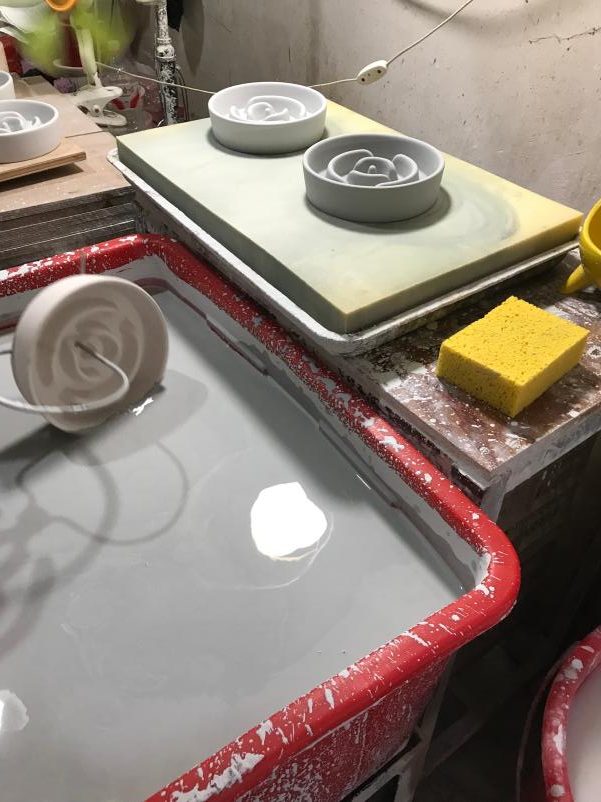
| 3. Slip casting | Liquid clay poured into plaster molds — used for complex shapes such as raised feeders and double bowls | Mold-release & seam check |
| 4. Trimming | Rim and foot ring refined at the leather-hard stage | Dimensions & finish |
| 5. Greenware inspection | Every dried, unfired bowl checked for cracks and deformation | QC Gate 1 |
| 6. Bisque firing | First kiln firing hardens the body into porous bisque | Firing records |
| 7. Water cleaning | Bisque dust washed off so glaze bonds evenly | Surface check |
| 8. Glazing | Bowls dipped or sprayed with glaze in your specified color | Coverage & thickness |
| 9. Glaze firing | High-temperature kiln firing vitrifies the glaze onto the body | Kiln records |
| 10. Final inspection | Pinholes, glaze runs, color consistency — then AQL check before packing | QC Gate 2 |
Stage 1–3: Forming the Body
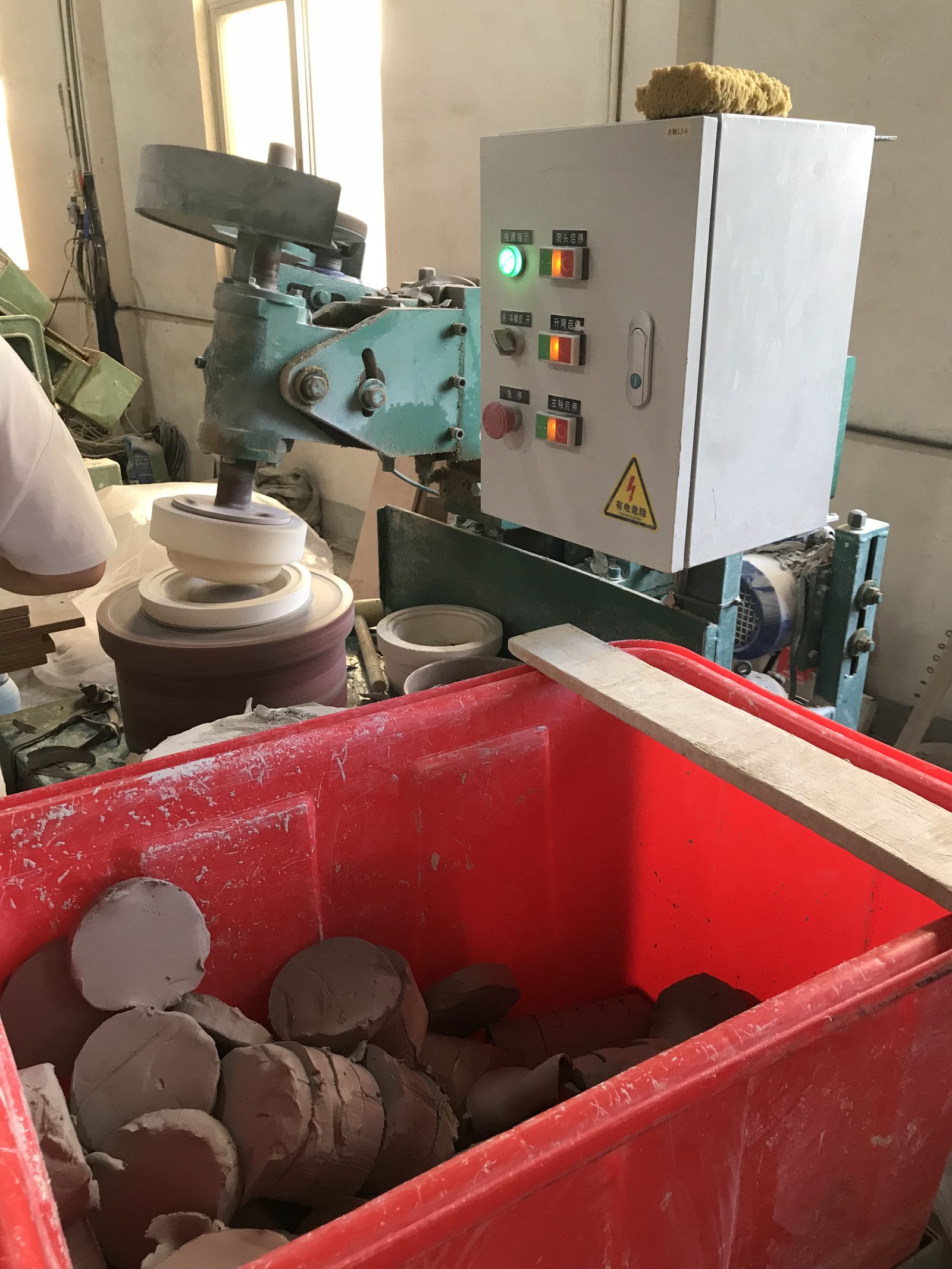
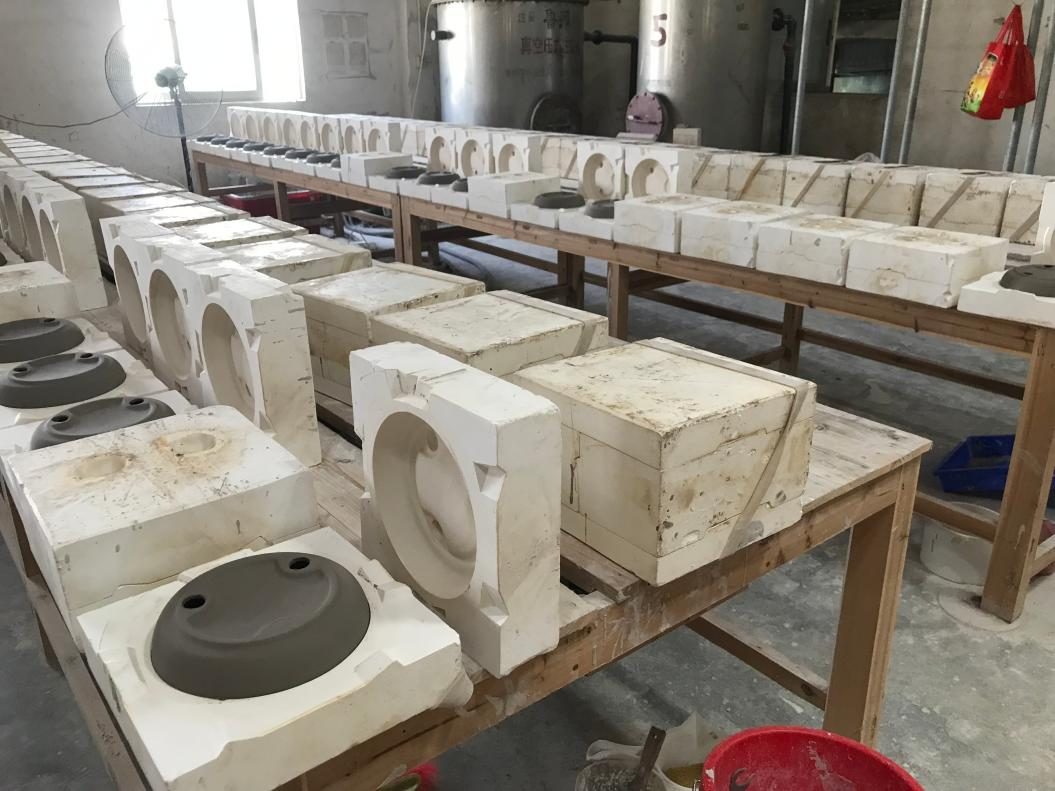
Round bowls are roller-formed: a profiled roller head presses clay against a rotating plaster mold, which sets wall thickness and shape in one motion. Complex silhouettes — raised feeders, double diner sets, sculpted rims — go through slip casting in plaster molds, which is also why ODM shapes need new molds and why their MOQ sits higher. Ask a supplier which route your design takes; it determines both the sample timeline and the unit cost.
QC Gate 1: Greenware Inspection (Stage 5)
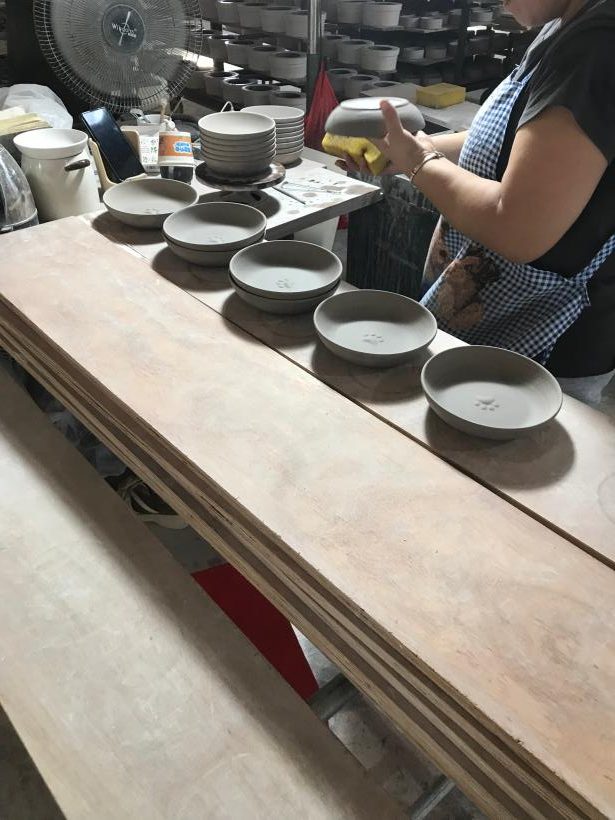
Before a single bowl enters the kiln, every dried piece is inspected by hand for cracks, warpage and rim defects. This is the cheapest place in the whole process to catch a problem — after bisque firing the same defect costs the supplier a fired bowl, and after glaze firing it costs your delivery date. Suppliers who skip greenware inspection are quietly passing that cost to you.
Stage 6–9: Bisque, Clean, Glaze, Fire Again
The first firing (bisque) hardens the body but leaves it porous, so it can accept glaze. Bisque pieces are washed, then glazed by dipping or spraying to your specified color, and loaded into the kiln — bowls are stacked in saggars so glaze-to-glaze contact never happens. The glaze firing vitrifies the surface into the hard, glossy, food-safe finish that defines ceramic. Decoration such as decals or gold rims is applied around these firings, which is why custom decoration adds lead time rather than just cost.
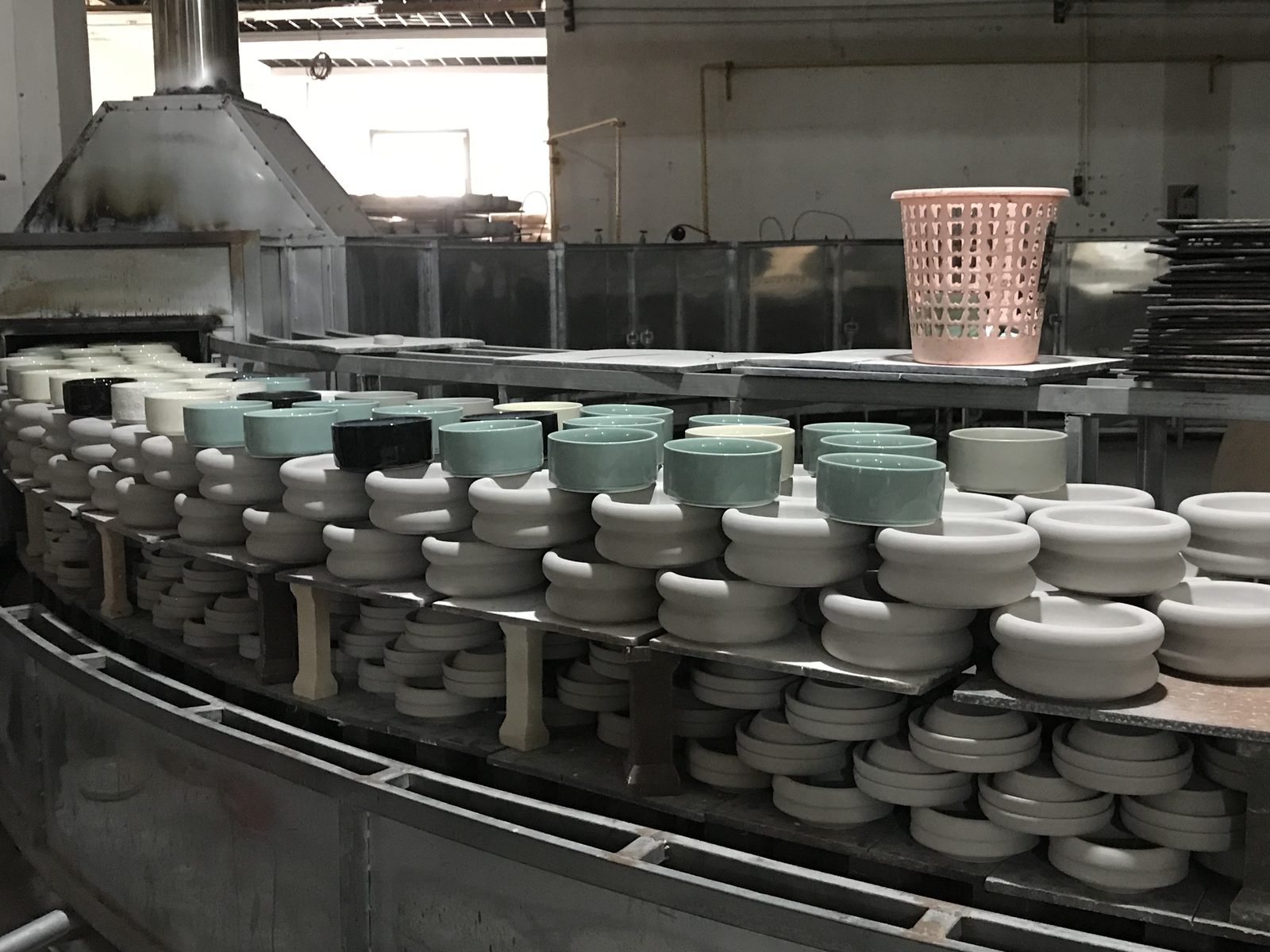
QC Gate 2: Final Inspection Before Packing (Stage 10)
Out of the kiln, every batch is checked for pinholes, glaze runs, color consistency against the golden sample, and decal alignment — then a final AQL inspection to your specified acceptance level before packing. We also welcome third-party inspection (SGS, QIMA, or your own agent) before shipment: a manufacturer with nothing to hide will never object.
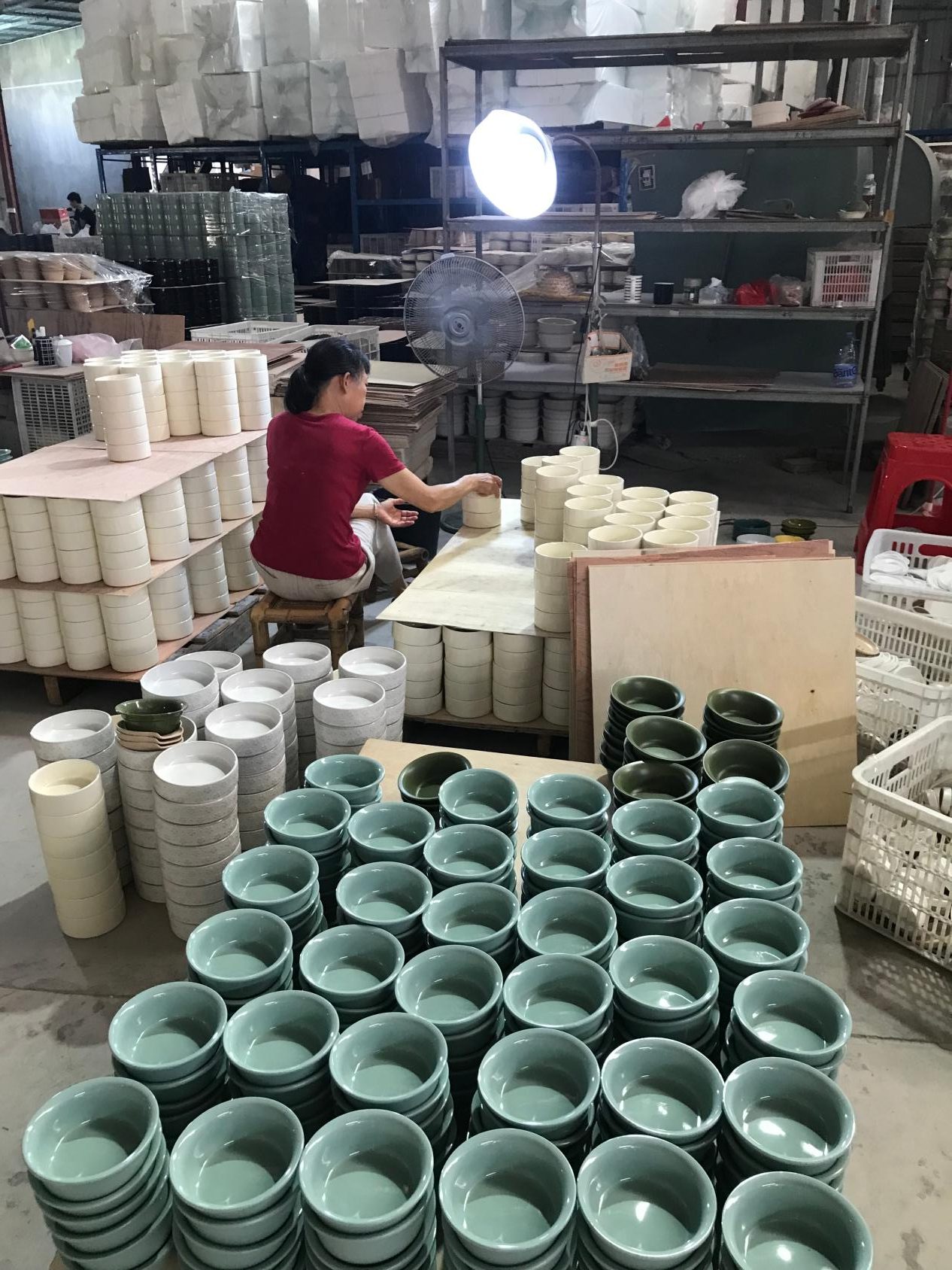
Who Controls the Schedule?
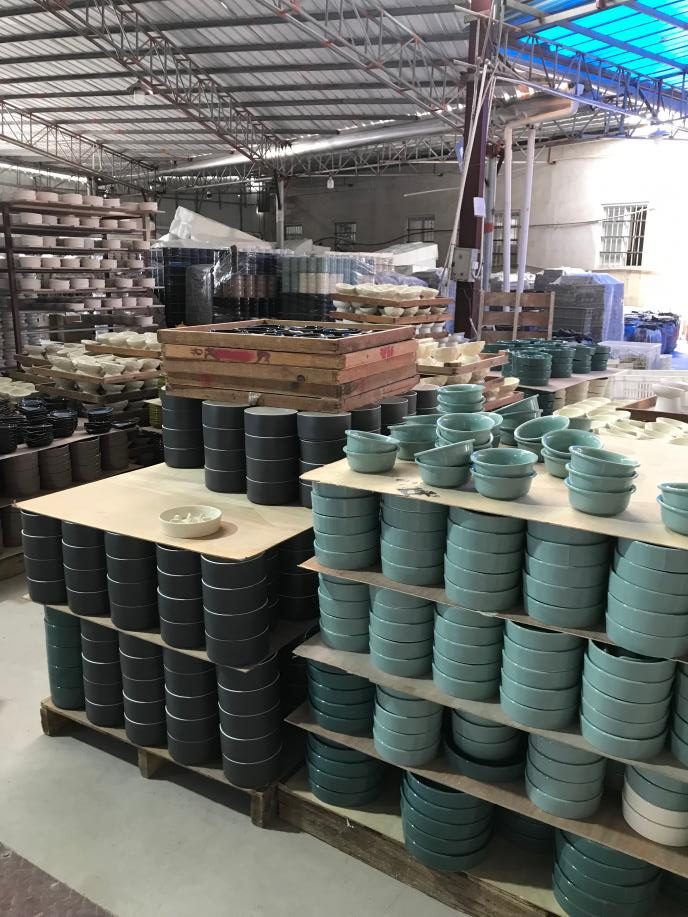
This is the single biggest structural difference between a reliable supplier and a middleman in ceramics. We run production, QC and packing under one roof in our own 8,000 m² facility, with decoration and firing slots booked in advance, which keeps delivery dates predictable even in Q3–Q4. How to verify: ask for workshop photos or a video call walkthrough of the line above, and ask directly whether any production step is outsourced.
Section 6/8What Drives the Price of a Custom Ceramic Pet Bowl
Ceramic bowls vary widely in cost because six variables move independently:
- Bowl weight and wall thickness — heavier bowls use more material and, critically, more freight. Ceramic is dense; ocean freight per unit can rival or exceed the product cost. A lighter double-fired body can be cheaper landed than a chunkier bowl with a lower FOB price.
- Glaze and decoration — solid glaze is the baseline; decal artwork adds cost; hand-painted detail adds the most.
- Packaging — bulk carton vs individual color box vs gift box with foam insert meaningfully shifts unit cost. Always compare quotes with identical packaging specs.
- Order volume — bigger orders fill kiln cars and decal sheets more efficiently, which is where the volume discount actually comes from.
- Tooling — new molds are either amortized into unit price or charged upfront; always ask which.
- Acceptance standard — a tighter AQL level means more inspection time and a slightly higher price.
Practical tip: when comparing suppliers, send everyone the same spec sheet — weight, dimensions, glaze color, decal, packaging, and Incoterms (FOB / EXW). A quote without a spec is a guess.
Section 7/8Ceramic vs Stainless Steel vs Plastic: A B2B Comparison
If you are deciding which material line to build your brand around, here is the honest view from the factory floor:
| Factor | Ceramic | Stainless Steel | Plastic |
|---|---|---|---|
| Premium look & feel | High — weight, gloss, decal artwork | Medium — functional | Low |
| Customization depth | Full — shape, glaze color, decals, logo | Limited — engraving, coating | Printing / molding |
| Food-safety story | Lead/cadmium testing (FDA / LFGB) | Strong (304/316 steel) | Resin-dependent (BPA-free claims) |
| Unit weight & freight | Heavy — highest freight cost | Medium | Lightest |
| Durability | Can chip or break if dropped | Very high | High, but scratches over time |
| Retail positioning | Premium & gift | Mid-range, outdoor | Entry-level, promo |
| Typical buyer | Pet brands, gift & retail chains | Value brands, travel lines | Promotional & bulk retailers |
Ceramic commands premium shelf pricing precisely because of its weight, gloss, and artwork — the same properties that raise freight. Buyers who design packaging around that weight (stackable boxes, protective inserts) protect their margin.
Section 8/8FAQ
What is the MOQ for custom ceramic pet bowls?
Our MOQ is 500 units for private label designs on existing molds and for custom decal artwork and packaging. Fully custom ODM shapes carry a higher MOQ due to mold costs — contact us with your design for an exact figure.
How long does sampling take?
Standard sampling takes typically 1–2 weeks from confirmed specifications, depending on complexity. Revisions continue until you approve the golden sample. Stock samples are free of charge; custom samples are quoted case by case, freight collected.
Are your ceramic bowls FDA / LFGB compliant?
Yes. Our bowls are fired with lead and cadmium-free glazes, and we hold third-party test reports covering FDA food-contact requirements and LFGB limits. Reports are shared with every quotation, and we retest whenever the glaze or decal system changes.
Can you do private label packaging?
Yes. We produce custom color boxes, inner inserts, barcodes, hang tags, and gift boxes with foam inserts. Send your dieline or let our team design the packaging to match your artwork — see our design & customization capability for how we work.
Do you keep stock items ready to ship?
Yes. Alongside custom production we hold stock lines ready to ship year-round — ceramic bowls and stands, stainless steel bowls, slow feeders, bamboo-fiber and silicone items — at MOQ 10 pcs with no tooling cost and no sampling cycle. In-stock items ship in about 7 days, and stock SKUs can be combined with a custom run in the same container. See Section 4 for the current stock list.
How are your ceramic pet bowls made?
Through a ten-stage process: roller forming, high-pressure forming or slip casting (depending on the shape), trimming, greenware inspection, bisque firing, water cleaning, glazing, high-temperature glaze firing, and final inspection before packing. Two dedicated QC gates — greenware and post-firing — plus a final AQL check protect every order. See the full process with production photos in Section 4.
CTARequest a Quote or Free Sample
Ready to develop your own ceramic pet bowl line? As a ceramic pet bowl manufacturer and supplier to brands in 30+ countries, we make the first step simple:
Request a Quote
Get a Free Sample
Send your artwork, a reference photo, or just a rough idea — you will receive MOQ, unit pricing, and lead time within 24 hours. No obligation, no middleman: you talk directly to the team that makes the product.