BUYING GUIDE · 12 MIN READ · UPDATED OCTOBER 2026
Table of Contents
- Why the Bowl Material Is a Business Decision
- Ceramic: The Premium Shelf Player
- Stainless Steel: The Durability Workhorse
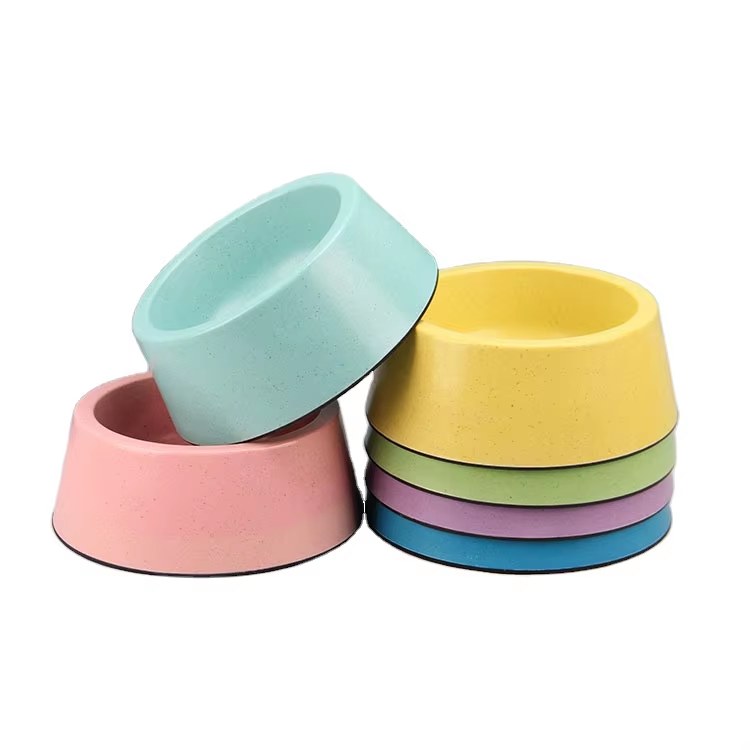
- Melamine and Plastic: The Volume Play
- Head-to-Head: Ceramic vs Stainless Steel vs Melamine
- MOQ, Lead Times and How to Order Each Material
- Which Material Fits Your Brand? A Positioning Framework
- FAQ
The short answer: there is no single “best” pet bowl material — there is the right material for a given shelf position, price point and logistics budget. Ceramic wins premium retail and gifting with weight, gloss and full custom decoration, at the cost of the highest freight. Stainless steel wins durability and travel with the lowest breakage risk, at the cost of limited branding. Melamine and plastic win entry-level price and volume, at the cost of a lighter, less premium feel and strict food-use rules. Most successful pet brands do not choose one — they build a tiered feeding line across two or three materials and let each do its job.
Since 2010 our team has designed, produced and exported pet feeding products to importers, pet brands and retail chains in 30+ countries, and the material question is almost always the first one a new buyer asks. This guide compares the three materials that dominate the pet bowl category — ceramic, stainless steel and melamine (with plastic in the same family) — from the standpoint that matters to a B2B buyer: what each material does for your margin, your logistics and your brand story.
Section 1/8Why the Bowl Material Is a Business Decision
In consumer eyes a bowl is a bowl. In your P&L, the material decides four things at once:
- Landed cost. The FOB price you compare between suppliers is only part of the story. Ceramic is dense — ocean freight per unit can rival or exceed the product cost, which is why a lighter bowl with a slightly higher FOB price can still be cheaper landed. Plastic is the opposite: freight is almost an afterthought.
- Shelf price ceiling. Weight, gloss and decoration let ceramic sit at gift and premium price points. A material that looks cheap caps your retail margin no matter how well it is made.
- Customization depth. Your ability to differentiate — custom shape, glaze colors, decal artwork, packaging — depends entirely on the material and the tooling behind it.
- Compliance exposure. Every food-contact material carries its own testing regime: lead and cadmium release for ceramic glazes, food-grade steel grades for stainless, migration testing for melamine and plastic. Pick the material whose test regime you can actually manage.
With that framing, let us look at each material the way a buyer should: strengths first, then the honest trade-offs.
Section 2/8Ceramic: The Premium Shelf Player
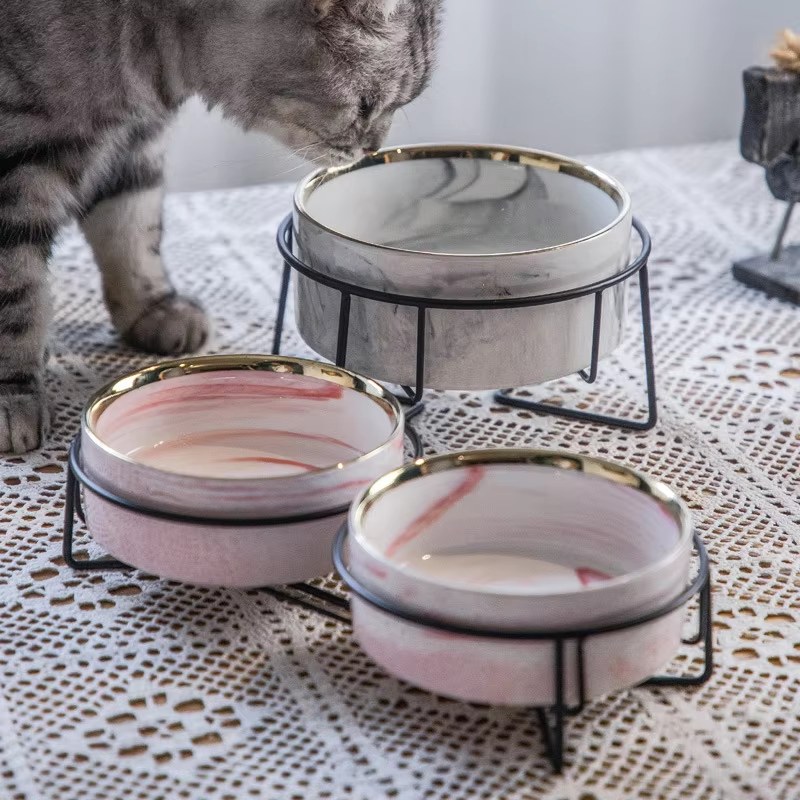
Ceramic is the material that makes a pet bowl look like tableware. Fired clay with a vitrified glaze has a weight and gloss no other feeding material reproduces, and it is the only one of the three that supports full decoration depth: custom shapes from new molds, unlimited glaze colors, decal artwork, hand-painted accents and gold or silver rim lines.
- Strengths: premium look and feel; highest perceived value; microwave- and dishwasher-friendly; fully customizable from shape to packaging; excellent for gift sets and raised feeder programs.
- Trade-offs: heaviest of the three (freight is the real cost driver); can chip or break if dropped, so retail packaging needs protection; and the glaze — not the clay — is the food-safety variable that must be tested.
That last point deserves emphasis. Ceramic itself is inert; the compliance risk sits entirely in the glaze and decoration system. A serious manufacturer should provide third-party lead and cadmium release reports (FDA food-contact requirements for the US market, LFGB limits for the EU) tied to the actual glaze and decal used on your order — and retest whenever either changes. Ask for report numbers, not adjectives.
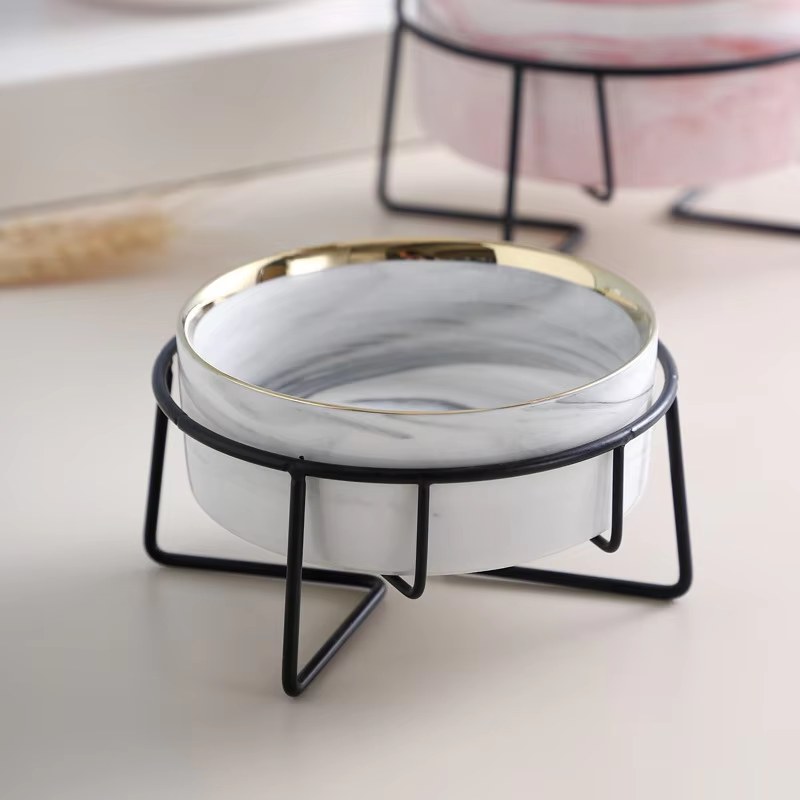
Related: See our marble ceramic bowl with metal stand · Deep dive: How to choose a ceramic pet bowl manufacturer
Section 3/8Stainless Steel: The Durability Workhorse
Stainless steel is what you reach for when the brief says unbreakable, hygienic, travel-ready. Food-grade 18/8 (304) steel does not rust, does not harbor bacteria in scratches the way plastic can, and survives drops, cars and dishwashers without complaint. Double-wall insulated versions keep water cooler in summer and add real perceived value.
- Strengths: highest durability and lowest breakage risk; light relative to ceramic; easy to sanitize; ideal for outdoor, travel and kennel channels; powder-coated color options are inexpensive.
- Trade-offs: customization is limited to laser or silk-screen logos and coating colors — there is no equivalent of a custom ceramic decal; the look is functional rather than premium; and cheap non-food-grade steel is common in the low end of the market, so specify the grade (18/8 / 304) in writing.
Steel is also the natural partner material to ceramic in a product line: the same brand can sell a ceramic diner set for home and a steel travel bowl for the car, with matching logo colors across both.
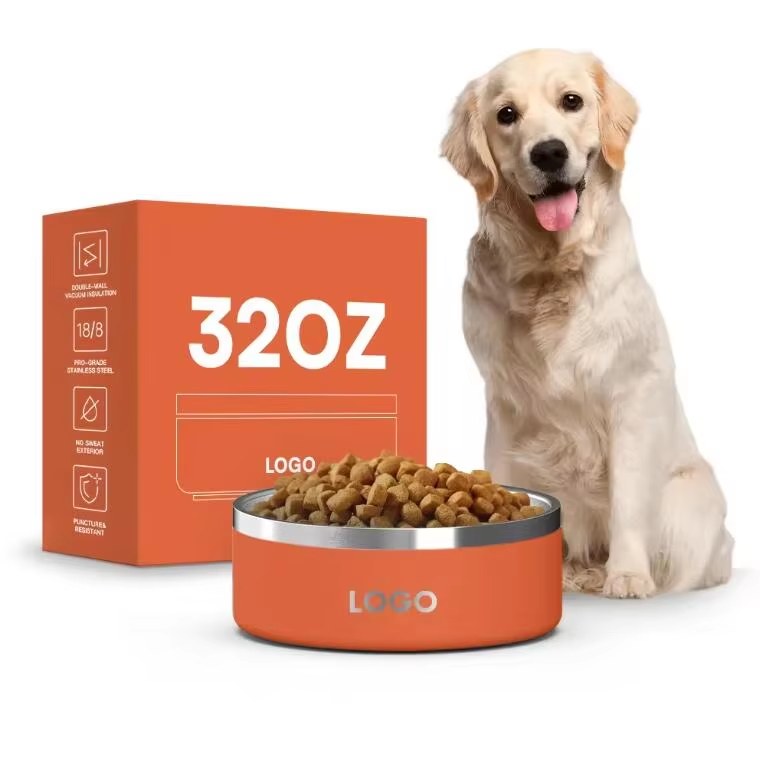
Related: See our custom-logo 64 oz double-wall steel bowl
Section 4/8Melamine and Plastic: The Volume Play
Melamine and plastic bowls own the entry price point. Injection molding turns out colorful, lightweight bowls at a unit cost ceramic cannot touch, which makes them the default for promotional programs, multipacks and price-driven retail. Within this family you will also find the functional stars of the category: slow feeders with maze interiors that slow down fast eaters, and lick mats in silicone that double as calming and grooming aids.
- Strengths: lowest unit cost and lightest freight; nearly unlimited colors; complex functional geometries (mazes, ridges, non-slip bases) are cheap to mold; ideal for volume and promo channels.
- Trade-offs: lightest perceived value, so the shelf price ceiling is low; surfaces scratch and stain over time, which shortens the replacement cycle (a plus for repeat sales, a minus for brand image); and melamine has strict usage rules — it is not suitable for microwave or oven use, and food-contact migration test reports are as essential here as glaze reports are for ceramic.
Neighboring materials round out the family: bamboo-fiber composite bowls trade a small price premium for an eco story that many pet brands want on the shelf, while silicone is collapsible, foldable and safe for treat-spreading applications neither rigid material can serve.
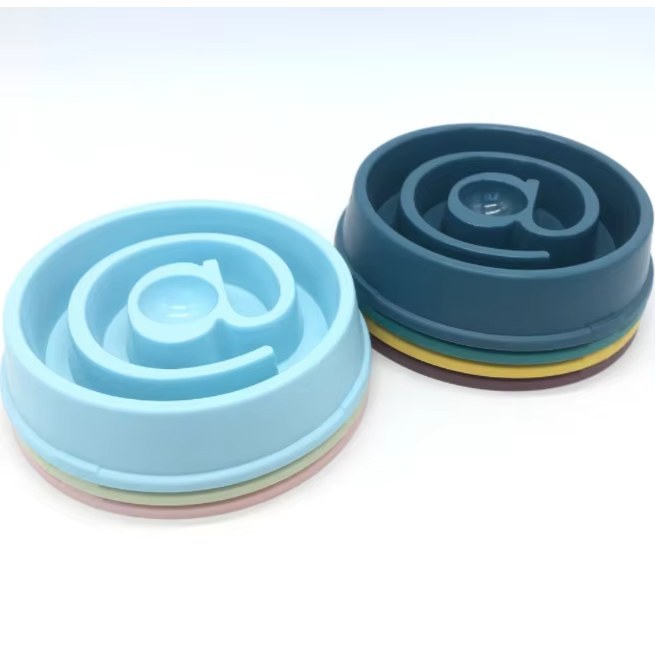
Related: Slow-feeder puzzle bowl · Non-slip plastic slow-eating dish · Fish-shape silicone lick mat
Section 5/8Head-to-Head: Ceramic vs Stainless Steel vs Melamine
Here is the honest side-by-side from the factory side of the table — use it as a category-review checklist:
| Factor | Ceramic | Stainless Steel | Melamine / Plastic |
|---|---|---|---|
| Look & shelf appeal | High — weight, gloss, decals, rim lines | Medium — clean, functional, modern | Low–medium — bright colors, light feel |
| Customization depth | Full — shape, glaze, decals, packaging | Logo + coating colors | Mold design + printing |
| Food-safety focus | Lead & cadmium glaze reports (FDA / LFGB) | Food-grade steel (18/8 / 304) | Migration reports; no microwave use |
| Weight & freight | Heaviest — highest landed cost | Medium | Lightest — cheapest to ship |
| Durability | Can chip or break if dropped | Very high — travel-proof | Scratches and stains over time |
| Heat & dishwasher | Microwave & dishwasher friendly | All temperatures | Dishwasher ok; never microwave |
| Retail positioning | Premium, gift, boutique | Mid-range, outdoor, travel | Entry-level, promo, multipack |
| Typical buyer | Pet brands, gift & retail chains | Value brands, travel lines, kennels | Promotional & volume retailers |
One practical note buyers often miss: packaging design should follow the material. Ceramic needs foam inserts and drop-test-ready boxes; steel and plastic can ship in lighter cartons. Comparing quotes with identical packaging specs across materials will mislead you — compare each material at its own correct packaging standard.
Section 6/8MOQ, Lead Times and How to Order Each Material
Material choice changes the product — it should not change the way you buy. Our commercial structure is the same across ceramic, steel and plastic lines: stock items carry a low entry MOQ, and custom work starts at a volume that makes decoration economical.
MOQ by Order Type (All Materials)
| Order Type | MOQ | Notes |
|---|---|---|
| Stock items (existing molds, ready to ship) | 10 pcs | Test a material or fill a container gap |
| Private label / OEM (your logo, decal, box) | 500 pcs | Most common route for brand lines |
| ODM (new mold, custom shape) | Quoted per design | Mold fee and exclusivity agreed in writing |
Commercial Terms at a Glance
| Term | What We Offer |
|---|---|
| Payment terms | L/C, T/T, PayPal and credit card |
| Quote response | Within 24 hours of your specification |
| Sampling | Typically 1–2 weeks; stock samples free, custom samples quoted case by case |
| Stock lead time | In-stock items ship in about 7 days |
| Custom production | Lead time quoted per order and confirmed in writing with your quotation |
Stock Lines You Can Order Today
A cross-material sample of ready-to-ship feeding products — every item below is available at MOQ 10 pcs:
| Ready-to-ship item | Material | MOQ |
|---|---|---|
| Marble ceramic bowl with metal stand | Ceramic | 10 pcs |
| 64 oz double-wall insulated steel bowl | Stainless steel | 10 pcs |
| Non-slip slow-eating plastic dish | Plastic | 10 pcs |
| Bamboo-fiber eco bowl | Bamboo fiber | 10 pcs |
| Fish-shape silicone lick mat bowl | Silicone | 10 pcs |
| Leakproof travel water-bottle bowl | Plastic + steel parts | 10 pcs |
The full feeding range sits in Bowls & Feeders for Dogs and Bowls & Feeders for Cats. Stock availability moves with the season and is confirmed at quoting stage — tell us the material, item and quantity and we will reply within 24 hours. Mixing materials is not only allowed but encouraged: stock SKUs across ceramic, steel and plastic can ship together in one container alongside your custom run.
Section 7/8Which Material Fits Your Brand? A Positioning Framework
Match the material to the job the product must do on your shelf:
- Choose ceramic if your brand sells on design, gift-ability or premium positioning — boutique pet retail, museum shops, designer collaborations, holiday gift sets. The freight bill buys you a shelf price that plastic can never justify.
- Choose stainless steel if your customer is active — travel lines, outdoor channels, kennels and vet clinics, or any program where breakage claims would eat your margin. Pair it with Pantone-matched coatings to keep the brand visible.
- Choose melamine or plastic if volume and price are the brief — promotional programs, multipacks, entry-level retail, or functional formats like slow feeders where the geometry, not the material, is the product.
- Add bamboo fiber when the brief includes an eco narrative, and silicone for treat, calming and travel accessories that rigid materials cannot serve.
The strongest catalogs do not pick a side. A common structure we build for customers: a ceramic diner set as the brand anchor at the top of the range, a steel travel bowl carrying the logo into the outdoors, and a plastic slow feeder as the accessible entry point. Three materials, one brand story, three different margin profiles — and one container to ship them all.
Section 8/8FAQ
Which pet bowl material is the safest for food?
All three are safe when they are made and tested correctly — safety is a function of the supplier’s quality system, not the material alone. For ceramic, insist on third-party lead and cadmium release reports for the exact glaze and decal system; for steel, specify food-grade 18/8 (304); for melamine and plastic, require food-contact migration reports. We work to FDA food-contact requirements and LFGB limits and share test reports with every quotation.
What is the MOQ for each material?
Stock items in every material start at 10 pcs. Private label and OEM orders (your logo, decal artwork or packaging on existing molds) start at 500 pcs. Fully custom ODM shapes that require a new mold are quoted per design, with mold fee and exclusivity agreed in writing.
Are melamine bowls microwave-safe?
No — melamine should not be used in microwave or conventional ovens. It is dishwasher-safe and intended for room-temperature and cold food service. We recommend stating this clearly on your retail packaging; it is a standard usage note for the material, and honest labeling prevents the most common customer complaint in this category.
Will ceramic bowls survive international shipping?
Yes, when packed for the journey. We pack ceramic bowls with foam protection and dividers, with double cartons and wooden crates available for fragile decorations, and every order passes a final AQL inspection before packing. Third-party inspection before shipment (SGS, QIMA or your own agent) is welcome.
Can I mix materials in one order?
Yes. Stock SKUs across ceramic, stainless steel, plastic, bamboo fiber and silicone can be combined at MOQ 10 pcs each, and custom runs can ship in the same container. Many customers use the stock route to test which material sells before committing to a 500-piece custom run.
How do I get samples before ordering?
Stock samples are free of charge; custom samples are quoted case by case, freight collected. Sampling takes typically 1–2 weeks from confirmed specifications, and revisions continue until you approve the golden sample. Request samples for several materials at once and compare them on your own desk.
CTARequest a Quote or Free Sample
Still deciding between materials? Send us your positioning and price point and we will recommend the shortest route to a product that sells — with MOQ, unit pricing and lead time within 24 hours. As a manufacturer and supplier serving pet brands in 30+ countries since 2010, we run production, QC and packing under one roof, so you talk directly to the team that makes the product.
Email support@timopet.com or message WhatsApp +86 153 5610 2970 — or use the buttons below.
Request a Quote
Get a Free Sample