BUYING GUIDE · 13 MIN READ · UPDATED OCTOBER 2026
Table of Contents
The short answer: the three routes trade design control against speed and cost. Private label puts your logo, decal and packaging on proven, existing molds — the fastest and cheapest way to launch a branded ceramic line. OEM means you supply the design and specifications and the factory engineers them into production — more control, a little more time. ODM starts from your brief and ends with a new mold and an exclusive shape — the deepest differentiation, quoted per design. Most brands should start with private label, and step up to OEM or ODM once a shape proves it sells. If you want to test the water first, stock items start at 10 pcs with no branding at all.
Almost every conversation we start with a pet brand begins the same way: “Can you put our logo on it?” The answer is always yes — but the more useful question is which of the three manufacturing routes fits your brand right now. Private label, OEM and ODM are not marketing labels; they describe who brings the design, who pays for tooling, how much you can differentiate, and how fast you can launch. Since 2010 we have shipped pet feeding products to importers and pet brands in 30+ countries, and route selection is the single decision that most changes a buyer’s first-order cost, timeline and margin.
Section 1/8Why the Route You Choose Shapes Cost, Speed and Control
A ceramic pet bowl is a simple product to describe and a layered one to customize. Shape, glaze color, decal artwork, rim finish, base, stand and packaging are all decision points — and each of the three routes hands you a different set of those levers. Before comparing them head-to-head, here is what actually separates them:
- Design ownership. Who decides what the product looks like: the factory’s existing catalog (private label), your design team (OEM), or a joint development process that starts from your brief (ODM).
- Tooling investment. Existing molds are already paid for, which is why private label MOQs are low. A new mold is real money and real weeks — that is the ODM trade.
- Time to market. A private label bowl with your decal can move from artwork to sample in a couple of weeks; a from-scratch ODM shape is a project with its own schedule.
- Exclusivity. With private label, competitors can buy the same shape with their own branding. OEM and ODM can lock your design and tooling to you, in writing.
With that framing, let us walk each route the way a buyer experiences it: what you bring, what you get, and what it costs you in time and commitment.
Section 2/8Private Label: Your Brand on Proven Molds
Private label means you select a finished product from the factory’s existing range — shapes already in production, molds already paid for — and apply your branding to it: logo, decal artwork, glaze color from the standard palette, and retail packaging designed around your brand. The product itself is proven; the brand story is yours.
- What you bring: your logo, artwork files and packaging brief — no industrial design needed.
- What you get: a retail-ready branded product with the shortest possible path from decision to shelf, and the lowest entry MOQ of any branded route.
- Trade-offs: the shape is shared. Anyone can brand the same mold, so differentiation comes from your glaze and packaging choices, your merchandising and your price — not from the silhouette.
Private label is the right first move for most brands: boutique retailers building a house line, e-commerce sellers who need a catalog fast, and gift programs with seasonal deadlines. It is also the lowest-risk way to learn what your customers buy before you invest in custom tooling.
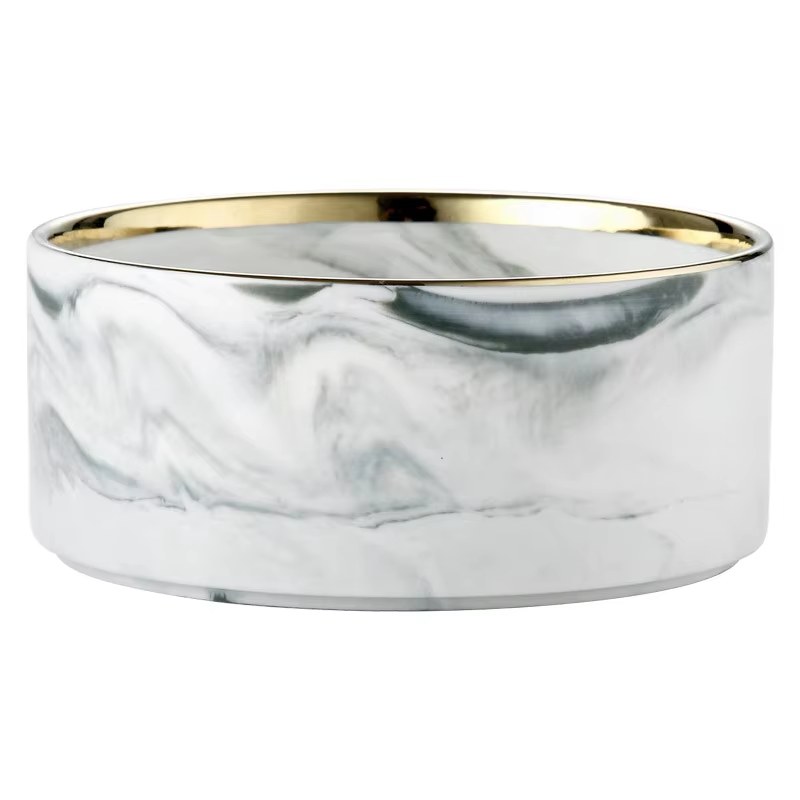
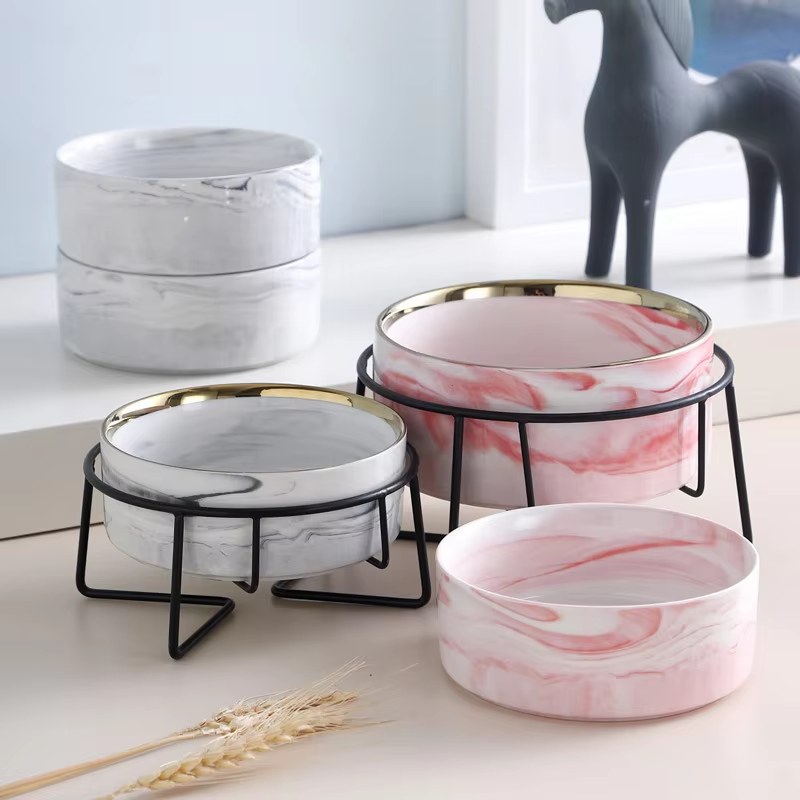
Example: our marble ceramic bowl with metal stand is a classic private label base — existing mold, custom decal and box available. The same logic applies across materials: this custom-logo 64 oz double-wall steel bowl is a stock body carrying a customer’s logo. Deep dive: how to choose a ceramic pet bowl manufacturer.
Section 3/8OEM: Your Design, Our Production
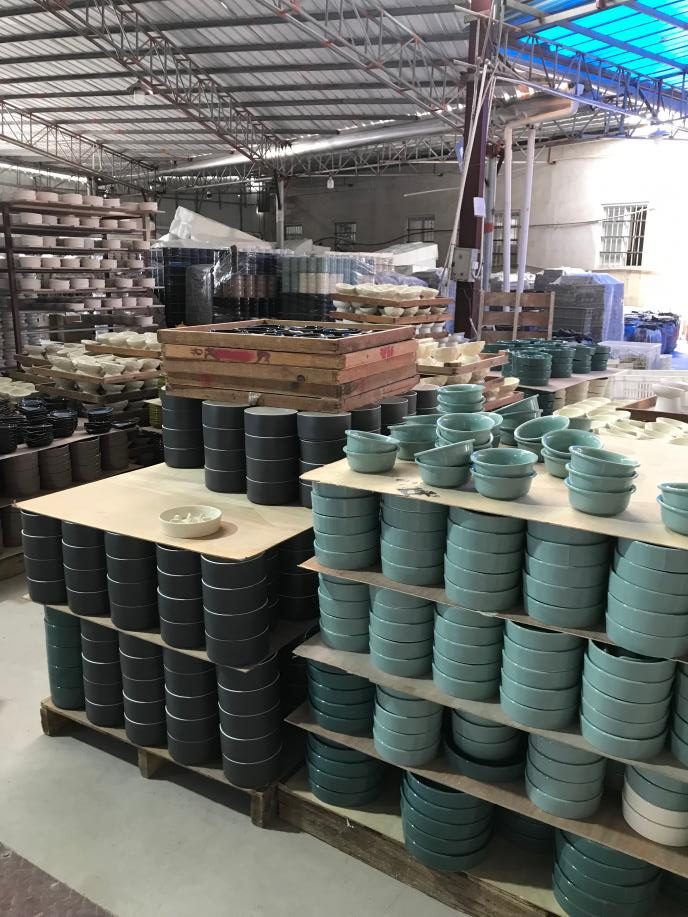
OEM means you own the design: drawings, dimensions, glaze colors, decal placement, packaging structure — you specify, the factory engineers and produces. In ceramic this usually means working from existing mold platforms with your modifications (a different foot, a new rim profile, a size change) rather than an entirely new shape, which keeps tooling cost minimal while giving your line a distinctive look.
- What you bring: a design specification — from a full technical drawing package to a reference sample plus a mark-up. Our engineering team reviews it for manufacturability, glaze behavior and packing logistics before quoting.
- What you get: a product that is measurably yours — dimensions, decoration and packaging matched to your brand system — with production handled by a team that has fired this category for years.
- Trade-offs: you carry the design risk. If a detail is hard to produce consistently, you will see it in the sample round — which is exactly what sampling is for.
OEM is the natural route once a brand has a design language worth protecting: signature glaze colors, a recognizable decal style, a consistent packaging system. If you want to see how deep the customization goes, our design and customization capability page shows the range — from glaze matching to retail-ready box structures.
Section 4/8ODM: From Concept to New Mold
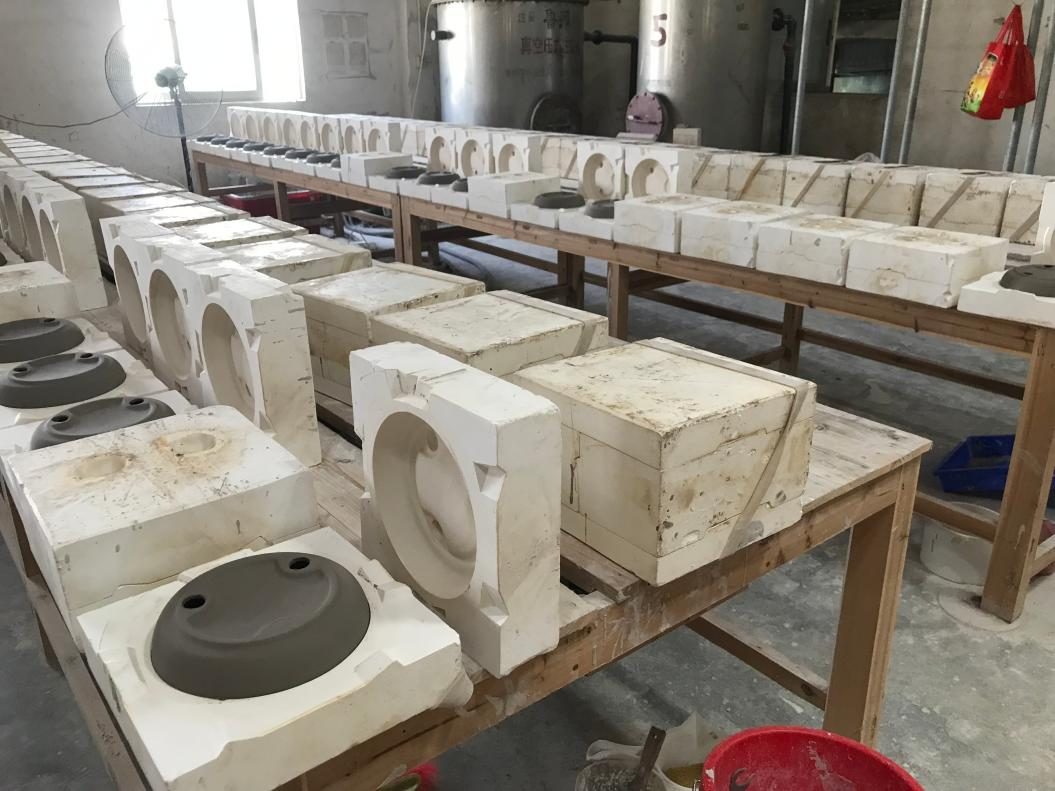
ODM is the deepest route: it starts from a brief, not a catalog. You describe the product — a raised double-diner for flat-faced breeds, a spill-proof travel bowl, a holiday gift set — and the factory develops the concept: sketches, 3D modeling, a prototype, then a new mold built for your shape. This is the only route that produces a silhouette competitors cannot buy.
- What you bring: a product brief, reference images, target retail price and quantity expectations. Design input can come from your side, ours, or both.
- What you get: an exclusive product — mold fee and exclusivity agreed in writing, so the shape stays yours for the agreed term.
- Trade-offs: the highest commitment. New tooling carries a mold fee, development adds weeks before the first sample, and the MOQ is quoted per design because it must cover both production and tooling economics.
Choose ODM when the shape itself is the selling point — signature collections, patent-worthy functional features, or brand collaborations where uniqueness is the story. Everything else about the program (glaze reports, packing, inspections) works exactly like the other routes; what changes is the front end.
Section 5/8Side-by-Side: Private Label vs OEM vs ODM
Here is the honest side-by-side from the factory side of the table — use it as a route-selection checklist:
| Factor | Private Label | OEM | ODM |
|---|---|---|---|
| Who provides the design | Factory catalog; you add brand identity | You — drawings, spec or marked-up sample | Joint — developed from your brief |
| Tooling | None — existing molds | Usually none — modifications on existing platforms | New mold — fee quoted per design |
| Typical MOQ | 500 pcs | 500 pcs | Quoted per design |
| Sampling | Fast — decorate an existing product | 1–2 rounds typical | Prototype then golden sample |
| Differentiation | Logo, decal, glaze color, packaging | Full spec control on proven platforms | Exclusive shape and design |
| Time to market | Fastest | Moderate | Longest — development plus tooling |
| Exclusivity | Shape is shared | Design is yours; platform shared | Mold and shape locked in writing |
| Best for | New lines, boutique retail, seasonal programs | Brands with a design system | Signature collections, patented features |
One note buyers often miss: these routes are stages, not forks. A buyer who launches a private label marble bowl this season has a selling history — real units, real reviews, real return data — that makes the OEM or ODM decision next season dramatically safer. Material choice matters just as much as route; we compare the feeding materials in detail in our ceramic vs stainless steel vs melamine guide.
Section 6/8MOQ, Sampling and Commercial Terms by Route
Route choice changes the product — it should not change the way you buy. The commercial structure is the same across the range: an intentionally low stock MOQ so you can test with almost no commitment, and a custom threshold that makes decoration economical for both sides.
MOQ by Route
| Route | What You Bring | MOQ | Notes |
|---|---|---|---|
| Stock (no branding) | Nothing — order as-is | 10 pcs | Test demand before any branding investment |
| Private label | Logo, decal artwork, packaging brief | 500 pcs | Existing molds; fastest branded route |
| OEM | Your design and specification | 500 pcs | Modifications on existing mold platforms |
| ODM | Product brief for a new shape | Quoted per design | Mold fee and exclusivity agreed in writing |
Commercial Terms at a Glance
| Term | What We Offer |
|---|---|
| Quote response | Within 24 hours of your specification |
| Payment terms | L/C, T/T, PayPal and credit card |
| Sampling | Typically 1–2 weeks; stock samples free, custom samples quoted case by case |
| Stock lead time | In-stock items ship in about 7 days |
| Custom production | Lead time quoted per order and confirmed in writing with your quotation |
| Warranty | 3 months against manufacturing defects |
The stock route deserves a serious look even if you are committed to custom: order a handful of candidate bowls at 10 pcs each — the marble ceramic bowl with stand, a non-slip plastic slow-eating dish, a bamboo-fiber eco bowl or a leakproof travel water-bottle bowl — and let your customers vote before you commit to 500 branded units. The full feeding range sits in Bowls & Feeders for Dogs and Bowls & Feeders for Cats, and stock SKUs can ship in the same container as your custom run.
Section 7/8How a Custom Ceramic Program Runs, Step by Step
Whichever route you choose, the working process is the same six steps — only the front end gets longer as the design gets deeper:
- 1. Specification and quote. Send your logo, artwork or design brief with target quantity. You receive a quotation with MOQ, unit pricing and lead time within 24 hours.
- 2. Sampling. A pre-production sample, typically 1–2 weeks from confirmed specifications, so you can hold the actual glaze, decal and finish in your hands.
- 3. Golden sample approval. Revise until the sample is right; the approved golden sample becomes the production standard.
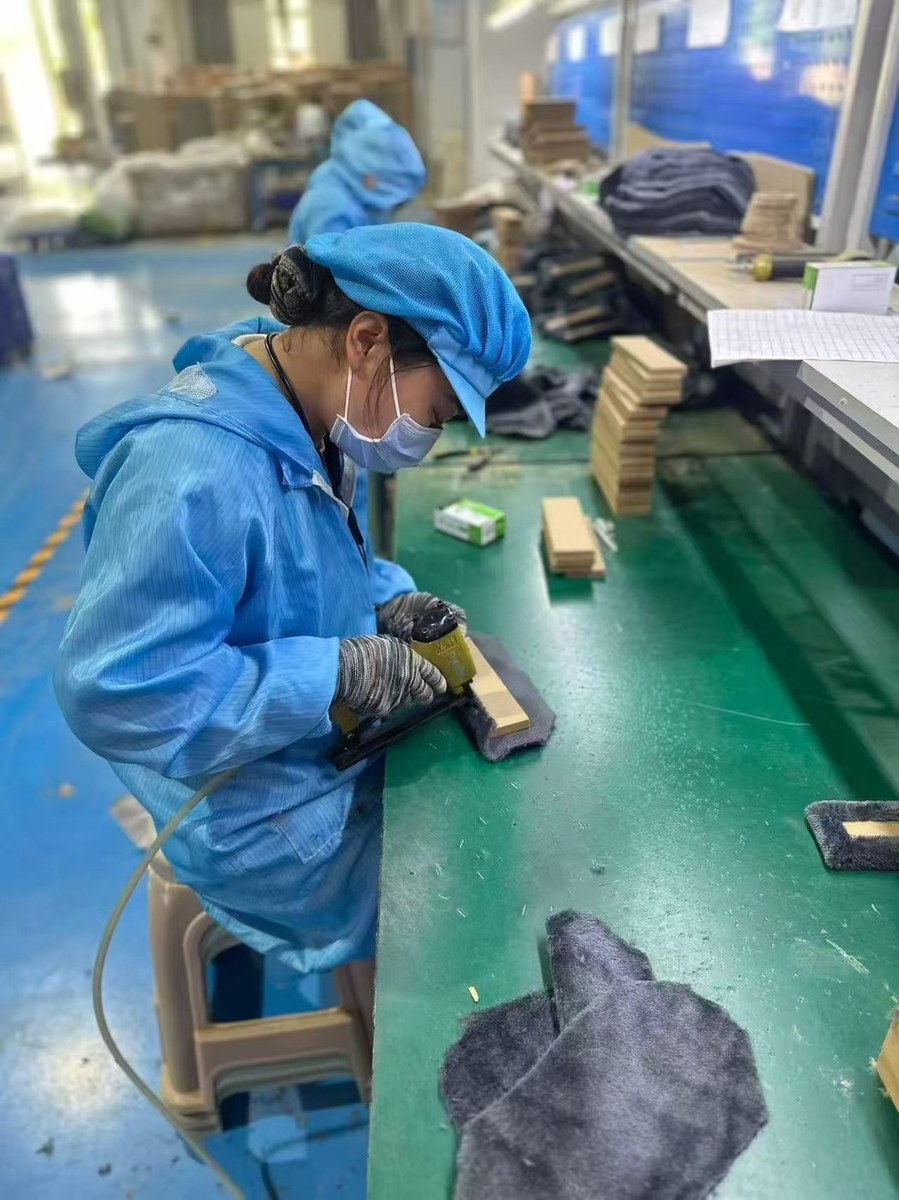
- 4. Production and QC. Production, QC and packing run under one roof, with in-line checks and a final AQL inspection before packing.
- 5. Retail-ready packing. Foam protection and drop-test-ready boxes for ceramic; your own packaging design is welcome, and third-party inspection (SGS, QIMA or your own agent) before shipment is welcome too.
- 6. Shipping and reorders. Stock and custom SKUs can ship in one container, and reorder specs are already on file — a repeat order is an email, not a project.
On quality: our quality system is ISO 9001 certified, our supply chain is BSCI audited, and food-contact glazes and decorations are tested to FDA food-contact requirements and LFGB limits — reports shared with every quotation. If you are still comparing materials alongside routes, our material comparison guide covers that decision separately.
Section 8/8FAQ
What is the difference between private label, OEM and ODM for ceramic pet bowls?
Private label applies your branding to a finished product from the factory’s existing range. OEM means you supply the design and specification and the factory produces it, usually as modifications on existing mold platforms. ODM starts from your brief and develops a new shape with a new mold, giving you an exclusive product. In short: private label = your brand on our product; OEM = your design, our production; ODM = co-developed from scratch.
What MOQ applies to each route?
Unbranded stock items start at 10 pcs — the lowest-commitment way to test the category. Private label and OEM orders (your logo, decal artwork or packaging on existing molds) start at 500 pcs. ODM projects that require a new mold are quoted per design, with mold fee and exclusivity agreed in writing.
Can I supply my own packaging design?
Yes — retail-ready packaging is part of every route. Send your dieline or let our team propose a structure: color boxes, window boxes, gift boxes and inner cartons are all common for ceramic, engineered together with the right foam protection so the bowl and the box arrive as intended. Packaging is quoted with the product, not after it.
How long does sampling take for a custom ceramic pet bowl?
Typically 1–2 weeks from confirmed specifications. Stock samples are free; custom samples are quoted case by case, freight collected. Revisions continue until you approve the golden sample, which then becomes the production standard — so the time you spend sampling is an investment in zero-surprise production.
Who owns the mold in an ODM project?
Whatever you agree — and we put it in writing before tooling starts. The standard structure: you pay the mold fee, the mold is dedicated to your orders, and the shape is exclusive to you for the agreed term. This is exactly the kind of term that should never be left to a handshake; get it in the quotation, not in a conversation.
Can I start with stock items and move to custom later?
Yes, and most brands should. Start at 10 pcs of unbranded stock to learn what sells, move to a 500-piece private label run on the winning shape, then graduate to OEM or ODM when you want exclusive design. Your artwork, specifications and golden sample stay on file, so each step builds on the last instead of starting over.
CTARequest a Quote or Free Sample
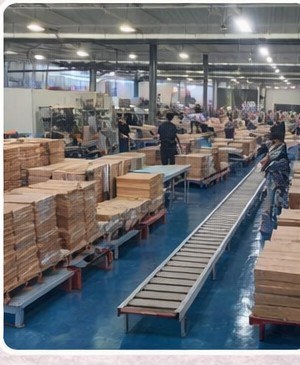
Not sure which route fits? Send us your brand positioning, target retail price and quantity — we will recommend the shortest path to a product that sells, with MOQ, unit pricing and lead time within 24 hours. As a manufacturer and supplier serving pet brands in 30+ countries since 2010, we run production, QC and packing under one roof, so you talk directly to the team that makes the product.
Email support@timopet.com or message WhatsApp +86 153 5610 2970 — or use the buttons below.
Request a Quote
Get a Free Sample