BUYING GUIDE · 14 MIN READ · UPDATED OCTOBER 2026
Table of Contents
- Why Packaging Is a Buying Decision, Not an Afterthought
- Retail-Ready Packaging Options for Ceramic Bowls
- Protective Packaging: How Ceramics Survive the Container
- Reading Export Carton Data Like a Buyer
- MOQ, Lead Time and Payment by Packaging Level
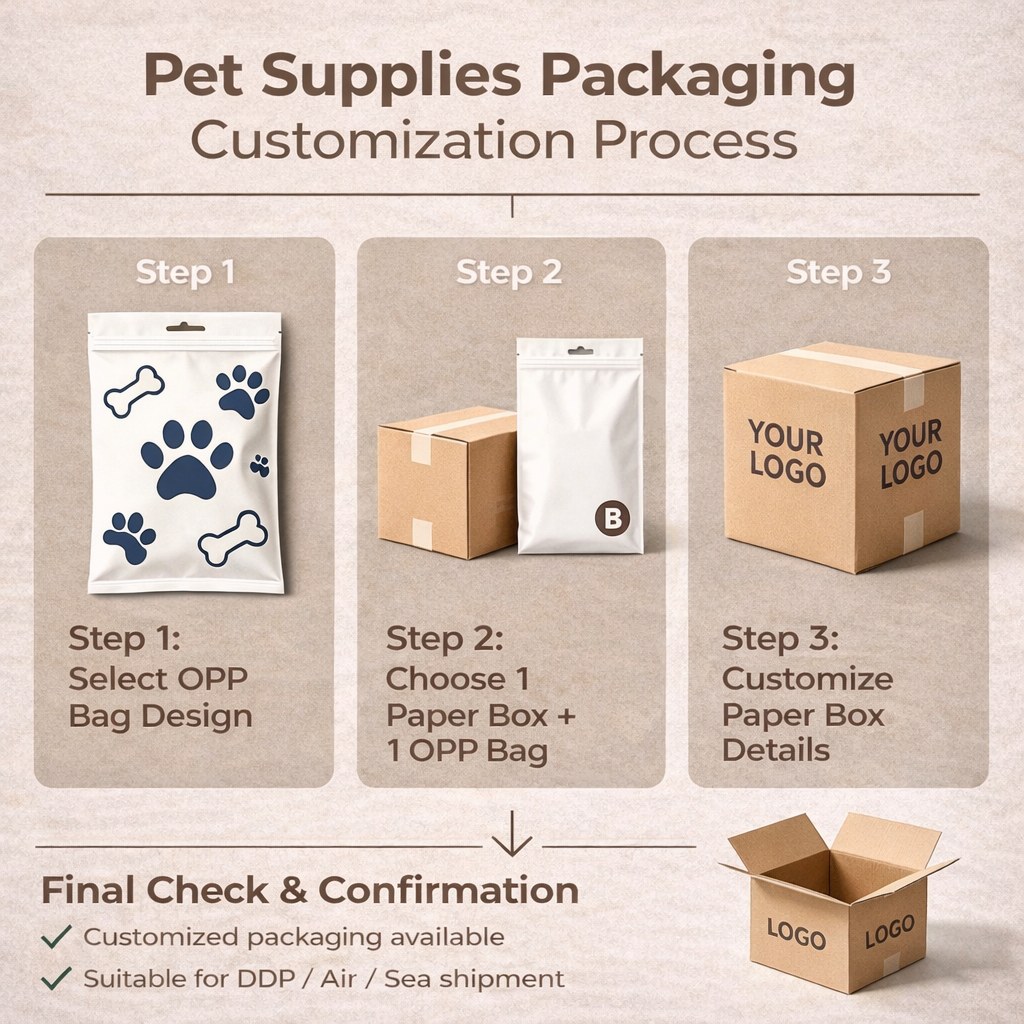
- The Custom Packaging Process, Step by Step
- Labeling and Compliance Basics
- FAQ
The short answer: a ceramic pet bowl needs packaging that does two jobs at once — sell the bowl on the shelf and protect it through the container. Retail-ready options run from a simple printed OPP bag up to a fully custom color box or gift box, and each level adds branding impact at a different cost. On the export side, the master carton data — pieces per carton, carton size, gross and net weight, CBM — is what decides your freight cost per bowl, so ask for it with the quotation, not after it. Custom retail packaging follows the same commercial structure as custom bowls: unbranded stock starts at 10 pcs, private label and custom packaging start at 500 pcs, and a print-ready artwork file is the one input that keeps everything moving fast.
Most packaging conversations with pet brands start the same way: “Can it ship in a color box with our logo?” The answer is always yes — but packaging deserves more than a yes. It is the first thing your customer touches, the last thing protecting a fragile product through a six-week ocean crossing, and one of the few order details that affects both your retail margin and your landed cost. Since 2010 we have packed and shipped pet feeding products to importers and pet brands in 30+ countries, and this guide covers both sides of the subject: the retail-ready options your customers see, and the export carton data your freight forwarder reads.
Section 1/8Why Packaging Is a Buying Decision, Not an Afterthought
A ceramic bowl is heavy, rigid and unforgiving: it cannot be squeezed into whatever box is lying around, and it shows every scuff its packaging fails to prevent. That makes packaging a real engineering decision with four downstream effects:
- Damage rate and landed cost. Protective packaging is engineered together with the bowl — foam density, carton stacking strength and inner-box fit all decide how many units survive the container. Every replaced unit costs more than the packaging that would have saved it.
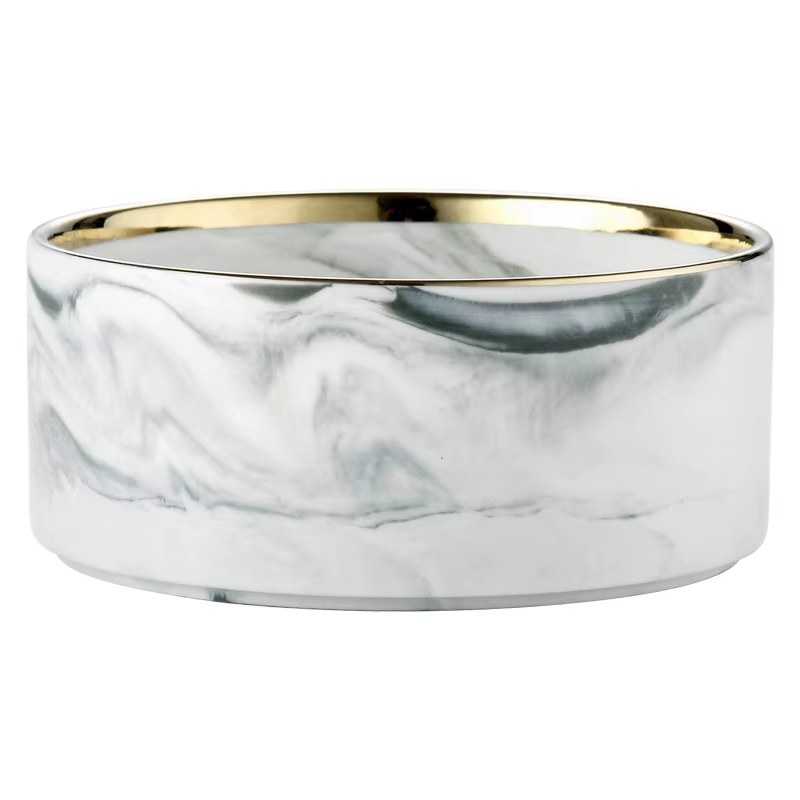
- Shelf conversion. In retail, the box is the pitch. A marble-glaze bowl in a printed color box with a die-cut window outsells the same bowl in a plain carton, at the same product cost.
- Unboxing and e-commerce. For online sellers, the retail pack is the product photography, the review photo and the gift moment. Packaging weight and size also drive your fulfillment cost per order.
- Freight economics. Retail packaging adds volume. A well-designed box fits more bowls per container; a badly designed one ships air. This is exactly why carton data belongs in the quotation stage.
The practical takeaway: decide your packaging level before the golden sample is approved. Changing a box structure after tooling is locked means re-quoting cartons, re-doing artwork and sometimes re-engineering protection — all avoidable with one early decision.
Section 2/8Retail-Ready Packaging Options for Ceramic Bowls
Here are the retail packaging structures we work with most, ordered from lightest-touch to most premium. All of them can carry your brand identity — logo, color system, photography and barcode.
| Option | What It Is | Best For | Relative Cost |
|---|---|---|---|
| Printed OPP bag | Clear poly bag with your logo and product info printed on it | Entry-level branding; keeping the bowl visible and dust-free | Lowest |
| Kraft sleeve on neutral box | Plain box wrapped with a printed kraft or paper sleeve | Natural, artisanal brand looks; small brand refreshes | Low |
| Color box (full print) | Fully printed corrugated or paper box, inside and out | Mainstream retail shelves; e-commerce hero shots | Medium |
| Window box | Color box with a die-cut window or clear film panel | Glaze colors and decals you want shoppers to see | Medium |
| Gift box with insert | Rigid or premium box with a fitted insert, often for a bowl-and-set combo | Gift programs, holiday sets, premium house lines | Highest |
| Standard export pack | Neutral protective packaging only, no retail graphics | Testing demand at 10 pcs before any branding spend | Included |
A common path: start with stock product in standard export packaging, then move the winning shape into a printed color box or window box once it proves it sells. If you are deciding between branding routes at the same time, our private label vs OEM vs ODM guide shows where packaging fits in each route — packaging is part of all of them, quoted with the product rather than after it.
Section 3/8Protective Packaging: How Ceramics Survive the Container
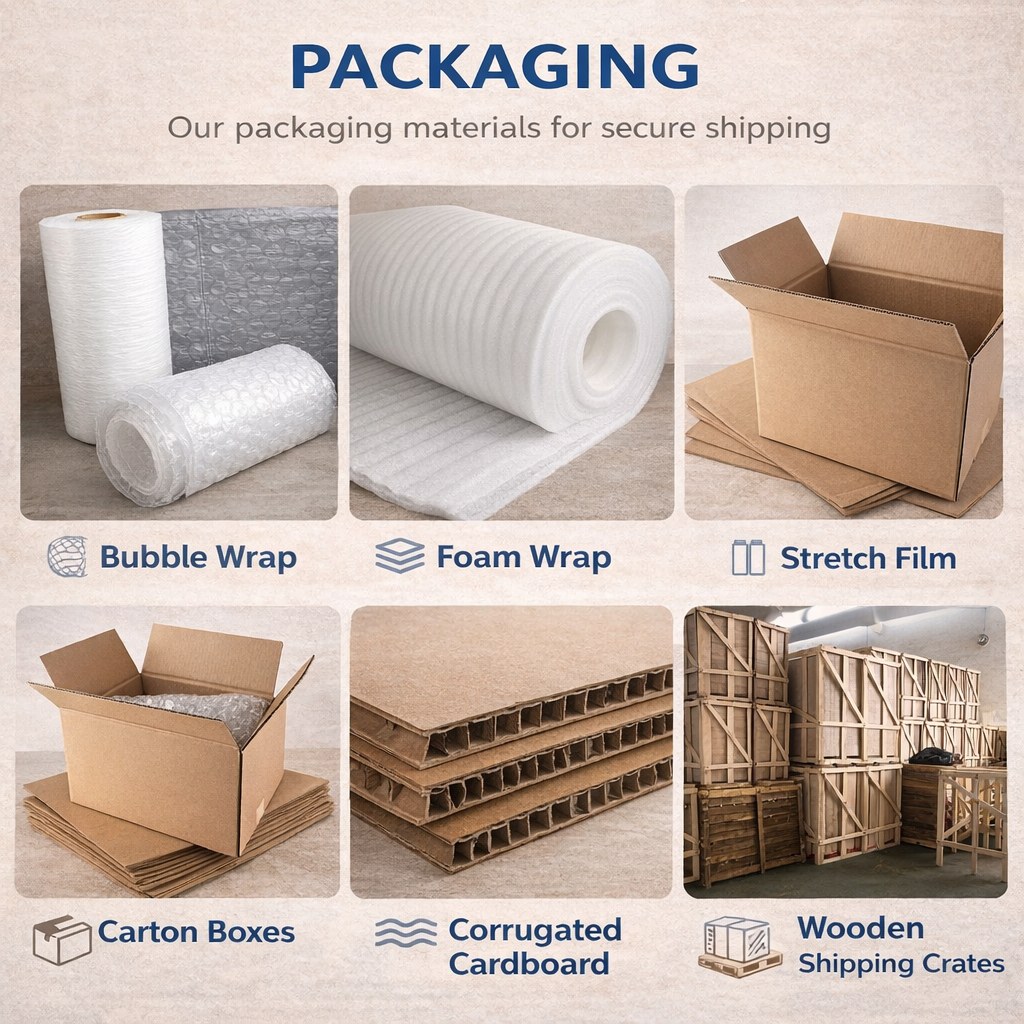
Retail graphics are the visible half of packaging; the invisible half is what stands between a kiln-fired bowl and a rolling ocean freight container. Ceramic is one of the heaviest categories in the pet aisle, and its protective system is layered:
- Unit protection. Each bowl is wrapped or sleeved — bubble wrap, foam wrap or a molded pulp/foam cradle — so units never touch each other. For bowls with stands or rims, the contact points get extra padding.
- Inner boxing. Wrapped units go into inner boxes, typically a fixed count per inner, so retail packs stay clean and countable through the supply chain.
- Master carton. Inners pack into a double-wall corrugated master carton sized for stacking — cartons in a container sit under real weight, and the board grade is chosen for that, not for looks.
- Fill and void control. Empty space inside a carton lets contents shift; fill material keeps each carton tight so vibration and drops cannot build momentum.
Two practical notes for buyers. First, protection and retail packaging are engineered together: a rigid gift box can double as structural protection, while a soft printed sleeve cannot, so the packing spec changes with the retail option you pick. Second, third-party inspection is welcome — if you work with SGS, QIMA or your own agent, the approved packing method is written into the inspection checklist so what was sampled is what ships.
Section 4/8Reading Export Carton Data Like a Buyer
Every quotation for packed goods should come with carton data — the technical sheet for the master carton. Buyers who skip it discover their freight cost after production; buyers who read it compare offers on true landed cost. The fields that matter:
| Carton Data Field | What It Means | Why You Care |
|---|---|---|
| Pcs / ctn | Finished units per master carton (and inners per carton) | Converts order quantity into carton count — and into warehouse handling |
| Carton size | Length × width × height of the master carton | Determines how cartons tile inside a container — small mismatches waste whole rows |
| Gross / net weight | Carton weight with and without packaging | Drives freight quotes, port handling and your per-unit logistics cost |
| CBM | Cubic meters per carton (volume) | Volume, not weight, is what fills a container of ceramics — CBM × cartons = space needed |
| Container estimate | Calculated loading for a 20GP or 40HQ container | Tells you how many units fill a container and where your freight break-even sits |
| Carton markings | Shipping marks, origin marking, handling icons printed on the carton | Required for customs and warehouse routing; confirmed before printing |
How to use it: take CBM × carton count to sanity-check the container estimate, and divide your total freight quote by units per carton to get freight per bowl. When you compare two suppliers, the one with the smarter carton design often wins on landed cost even at a higher unit price. And when retail packaging is custom, ask for carton data for the final packed configuration — a gift box with an insert changes both weight and volume versus a plain sleeve, and your freight plan should follow the configuration you actually ordered.
Section 5/8MOQ, Lead Time and Payment by Packaging Level
Packaging follows the same commercial ladder as the bowls themselves. The entry rung is deliberately low so you can test the category with almost no commitment; each branding step up adds a little input and a little time.
| Packaging Level | What You Bring | MOQ | Timing |
|---|---|---|---|
| Standard export pack (no branding) | Nothing — order as-is | 10 pcs | In-stock items ship in about 7 days |
| Logo decal + printed OPP bag | Logo artwork; bag design selected from standard options | 500 pcs | Product sampling typically 1–2 weeks from confirmed specs |
| Custom retail box (color / window / gift) | Print-ready artwork or a brief we develop with you | 500 pcs | Dieline proof with the quotation; packaging sample approved together with the product sample; production lead time confirmed in writing with your quotation |
| ODM incl. new packaging structure | Product brief covering shape and packaging concept | Quoted per design | Development schedule agreed at quotation stage |
Commercial terms stay constant across the ladder: quotes come back within 24 hours of your specification, payment is accepted by L/C, T/T, PayPal and credit card, stock samples are free while custom samples are quoted case by case, and every shipment carries a 3-month warranty against manufacturing defects. If you want to feel the products before choosing a packaging level, the 10-piece stock route is the honest test — put a marble ceramic bowl with metal stand, a custom-logo double-wall steel bowl and a bamboo-fiber eco bowl side by side and judge which one your shelf needs. The full range sits in Bowls & Feeders for Dogs and Bowls & Feeders for Cats.
Section 6/8The Custom Packaging Process, Step by Step
Custom packaging runs on the same discipline as the product itself — decide, proof, confirm, produce. In practice it looks like this:
- 1. Select the bag design. Choose a printed OPP bag from the standard structures — or send artwork for your own — and confirm the bag fits the bowl with its protection.
- 2. Choose the box combination. Pick the paper box and OPP bag pairing that matches your price point: plain box + printed bag, or printed box + plain bag, or both fully branded.
- 3. Customize the box details. Logo, colors, photography, copy, window shape, insert, barcode placement — applied to the dieline and proofed for your sign-off.
- 4. Final check and confirmation. Artwork proof approved, carton data recalculated for the final packed configuration, and the packing method written into the production order — suitable for sea, air and DDP shipments alike.
On artwork: the fast path is a print-ready vector file (AI or PDF) plus a dieline, your barcode, and color references — Pantone numbers beat screen screenshots every time. If you do not have a designer, send the logo and the brief and our team proposes the layout; proofs are revised until you sign off, and nothing prints without your confirmation. Production, QC and packing all run under one roof, so the people filling the cartons are working from the same approved spec you signed.
Section 7/8Labeling and Compliance Basics
A retail pack is also a compliance surface. These are the items buyers should have on their checklist before artwork sign-off:
- Barcode and retail data. GS1 barcode, SKU reference, size or capacity statement and your brand contact details, placed where your retail system expects them.
- Market language. Retail copy on the box should match the market you sell into — send final copy with the artwork rather than translating after printing.
- Origin and carton markings. Export cartons carry origin marking and shipping marks; both are confirmed with you before printing, since customs clearance reads the carton, not the box.
- Food-contact glaze specification. Glazes and decorations are specified against FDA food-contact requirements, and documentation is shared with the quotation — ask for it the way you ask for the carton data.
- Supply-chain standards. Our quality system is ISO 9001 certified and our supply chain is BSCI audited — company-level systems that cover how the goods are made and packed, which is what most retail partners audit against.
None of these items is difficult — the risk is only in sequencing. Every one of them lives on the artwork, and the artwork goes to print once. Collect them first, and packaging compliance becomes a checklist instead of a rework order. For the product-side view of the same principle, our ceramic pet bowl manufacturer guide covers specifications and QC in depth, and the material comparison guide explains why ceramic earns its packaging in the first place. Lighter accessories such as a non-slip slow-eating dish, a silicone lick-mat bowl or an interactive slow-feeder puzzle follow the same retail options with lighter protection specs — one more reason to confirm the packing method per SKU rather than assuming the ceramic spec transfers.
Section 8/8FAQ
What retail packaging options work for ceramic pet bowls?
The common structures are printed OPP bags, kraft sleeves on neutral boxes, fully printed color boxes, window boxes that show the glaze, and rigid gift boxes with fitted inserts for sets. All of them carry your logo, color system and barcode. For first orders, many brands start with a printed color box or window box on one hero SKU and keep the rest of the line in stock export packaging until the shape proves itself.
What does export carton data include, and which numbers matter most?
The standard sheet covers pieces per carton, inner-box count, carton dimensions, gross and net weight, CBM per carton, a 20GP/40HQ container loading estimate and the carton markings. The two numbers that move your money most are CBM (volume is what fills a container of ceramics) and pieces per carton (it converts freight and handling into a per-bowl cost). Ask for carton data together with the quotation so landed cost is known before you commit.
How much does custom retail packaging add to the cost?
It depends on the structure: a printed OPP bag is the lightest addition, a kraft sleeve is modest, and a fully printed color or window box adds more per unit — offset by higher shelf conversion and a stronger brand story. The honest comparison is always at landed-cost level: add the packaging delta per bowl, then re-check whether the smarter carton design recovered part of it in freight. Pricing is quoted with the product in one quotation, within 24 hours of your specification.
What artwork files do you need for custom packaging?
Print-ready vector files (AI or PDF) on our dieline, your GS1 barcode, and color references — Pantone numbers preferred. If you only have a logo and ideas, send the brief and our team proposes the layout for your revision. Proofs go back and forth until you sign off, and nothing is printed without your written confirmation; the approved artwork becomes part of the production order.
How is ceramic packed to survive container shipping?
In layers: each bowl is wrapped or cradled so units never touch, wrapped units go into inner boxes, inners pack into double-wall corrugated master cartons sized for stacking, and void fill keeps every carton tight so contents cannot shift. The packing method is written into the production order, and third-party inspection before shipment is welcome if you want the packing spec verified against the approved sample.
Does custom packaging have the same MOQ as custom bowls?
Yes — custom branding, whether it is a decal on the bowl or a fully printed retail box, starts at 500 pcs, while unbranded stock in standard export packaging starts at 10 pcs so you can test demand first. For ODM projects that include a new packaging structure, MOQ and development schedule are quoted per design and confirmed in writing with the quotation.
CTARequest a Quote or Free Sample
Tell us the product and the shelf you are aiming for — we will recommend the packaging level that fits, return a quotation with MOQ, unit pricing, lead time and carton data within 24 hours, and follow with a sample you can hold. As a manufacturer and supplier serving pet brands in 30+ countries since 2010, we run production, QC and packing under one roof, so packaging decisions are made by the same team that packs the cartons.
Email support@timopet.com or message WhatsApp +86 153 5610 2970 — or use the buttons below.