Every buyer who visits our workshop asks the same question within the first five minutes: are these plush toys made by machine, or by hand? The honest answer is both — and knowing which stage uses which method tells you a lot about the supplier you are buying from.
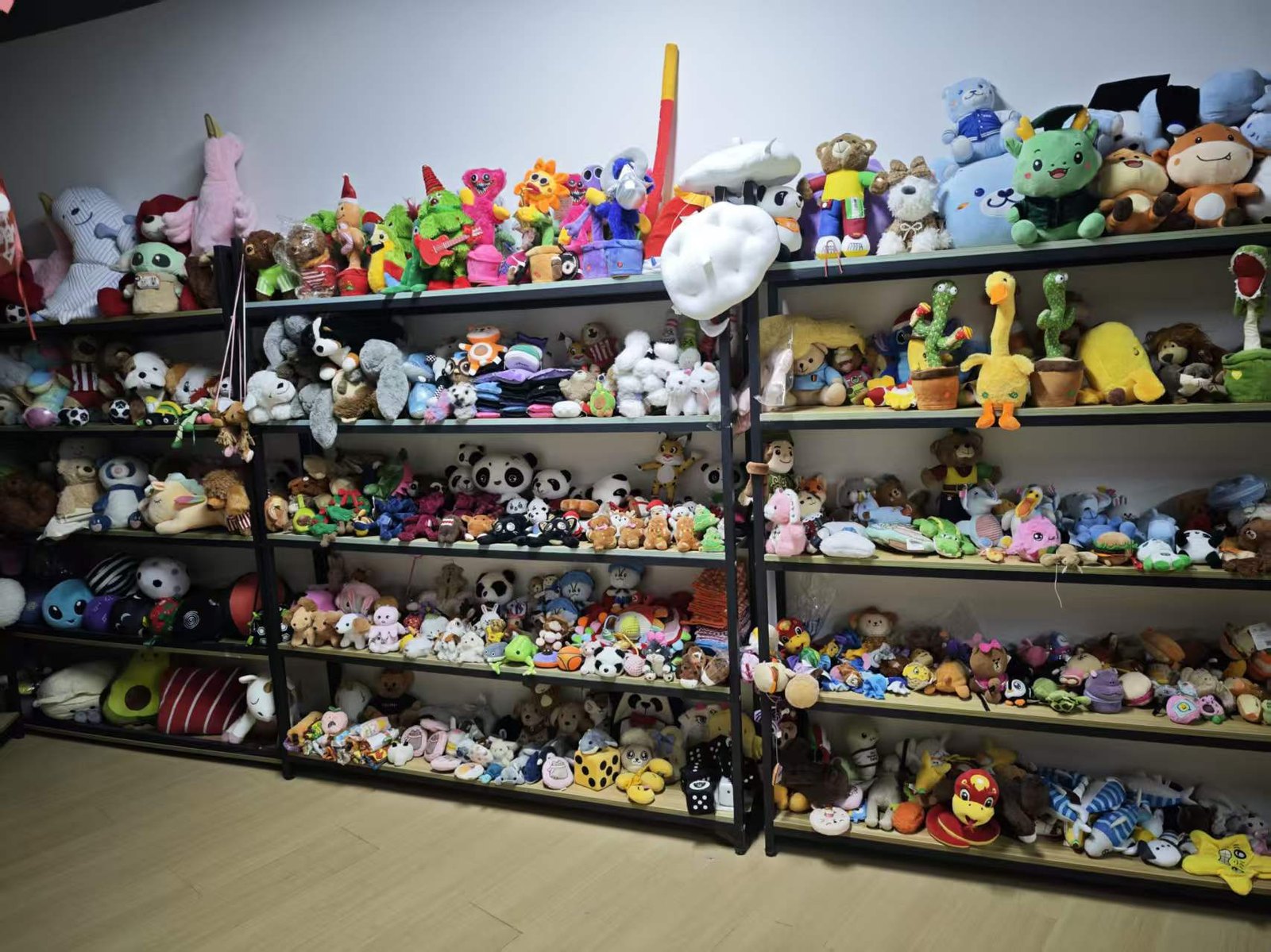
We took the photos and videos on this page on our own workshop floor during a normal production week. No staged showroom shots — this is exactly what your order goes through.
One Order, Two Ways to Stitch
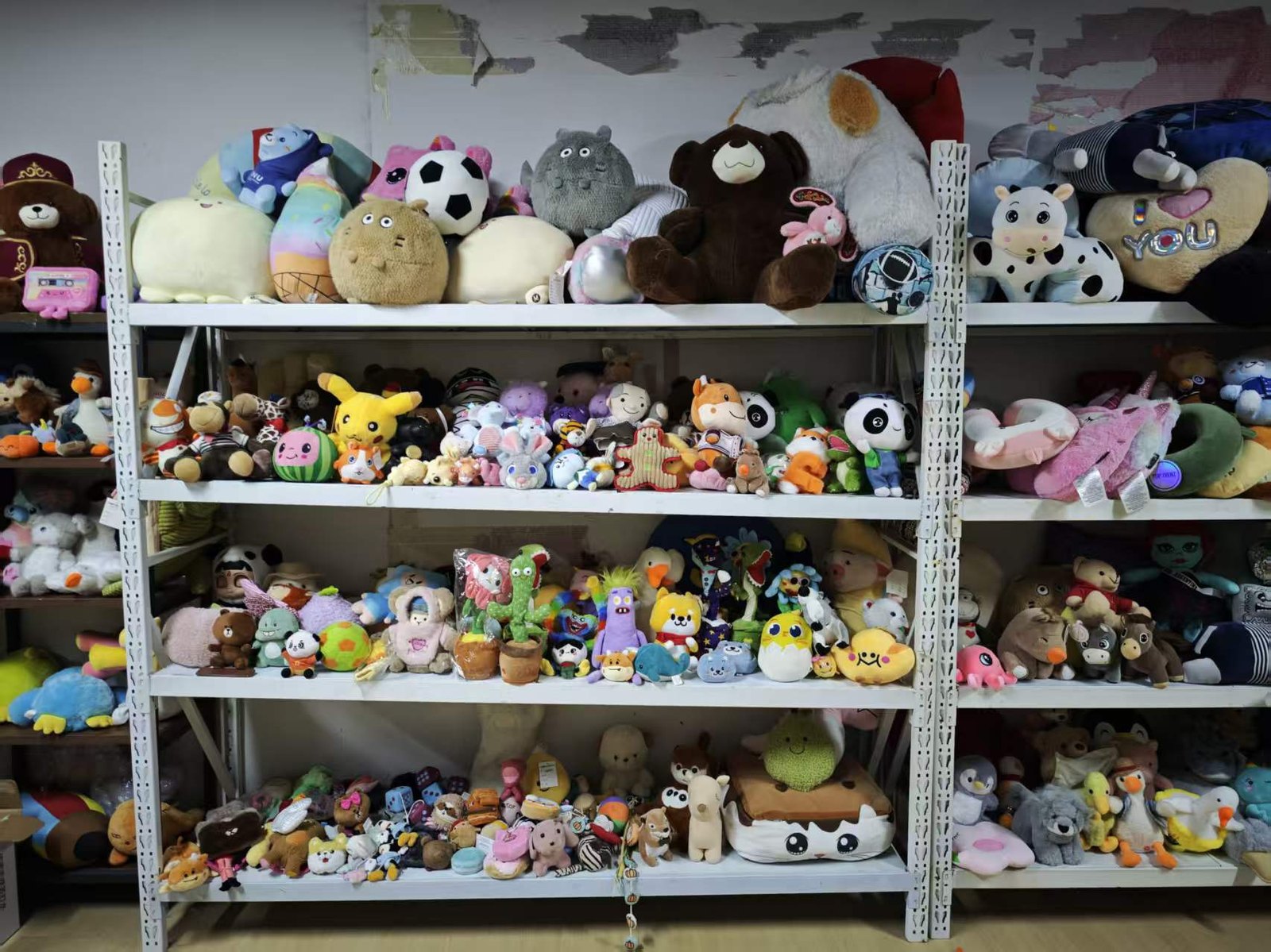
A custom plush pet toy passes through two very different sewing stages. Machine sewing builds the body: it joins the main panels, sets the seam allowances, and produces the strong, repeatable seams a bulk order depends on. Hand sewing finishes the toy: it closes the openings machines cannot reach, positions small parts, and shapes the details that give each character its personality.
Neither method replaces the other. A factory that relies only on machines will struggle with shaped, sculpted designs. A workshop that relies only on hand sewing cannot hold a consistent schedule on a 5,000-piece order. The craft is in knowing where to switch from one to the other.
Before a Single Stitch: Patterns and Cut Pieces
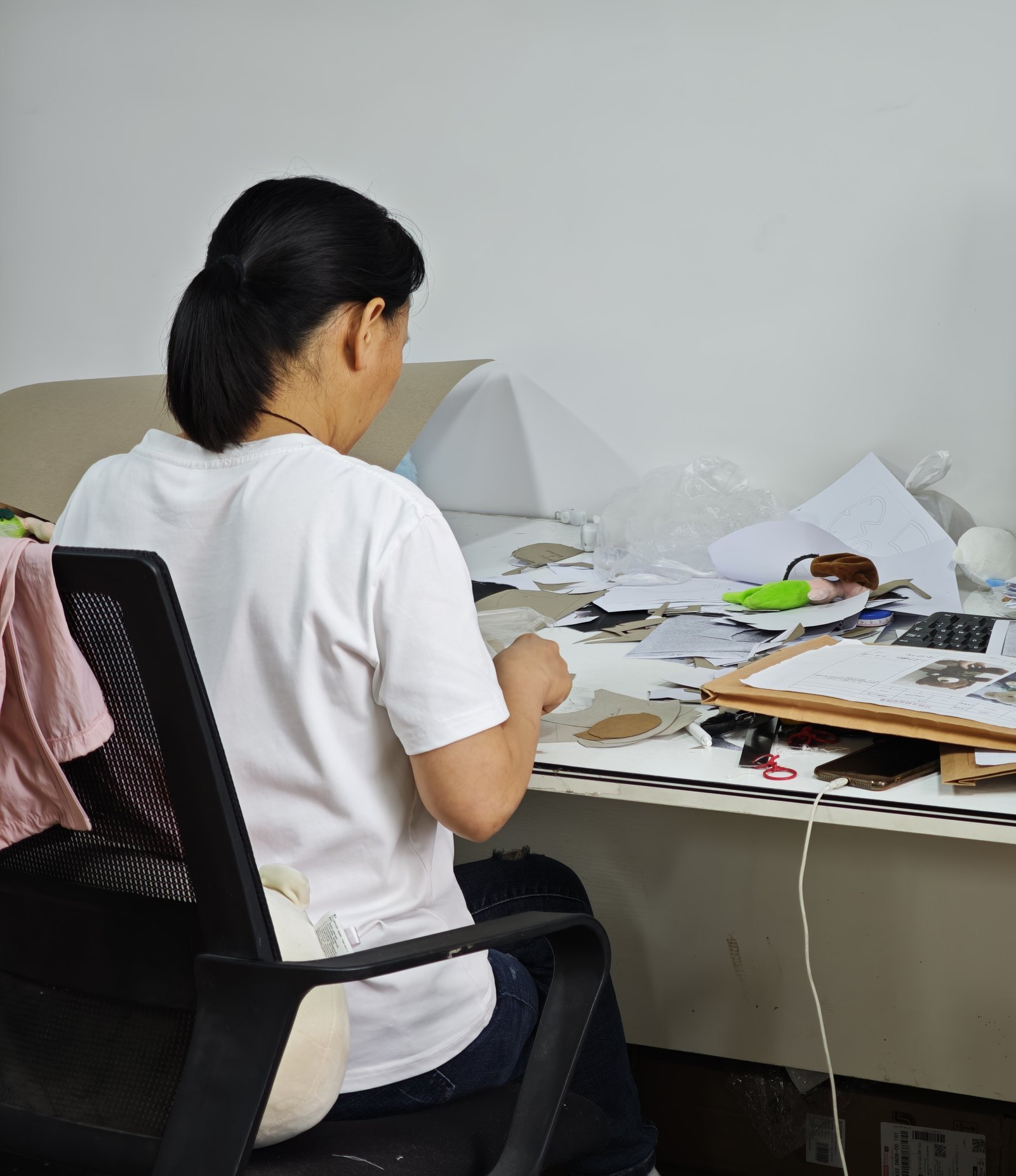
Sewing quality is decided before the machine is switched on. Each design starts as a paper pattern — one piece per body panel, tested and corrected on a prototype until the proportions are right. The pattern maker also sets the seam allowance for every seam, which affects both the strength of the toy and how easily the sewer can keep the line consistent.
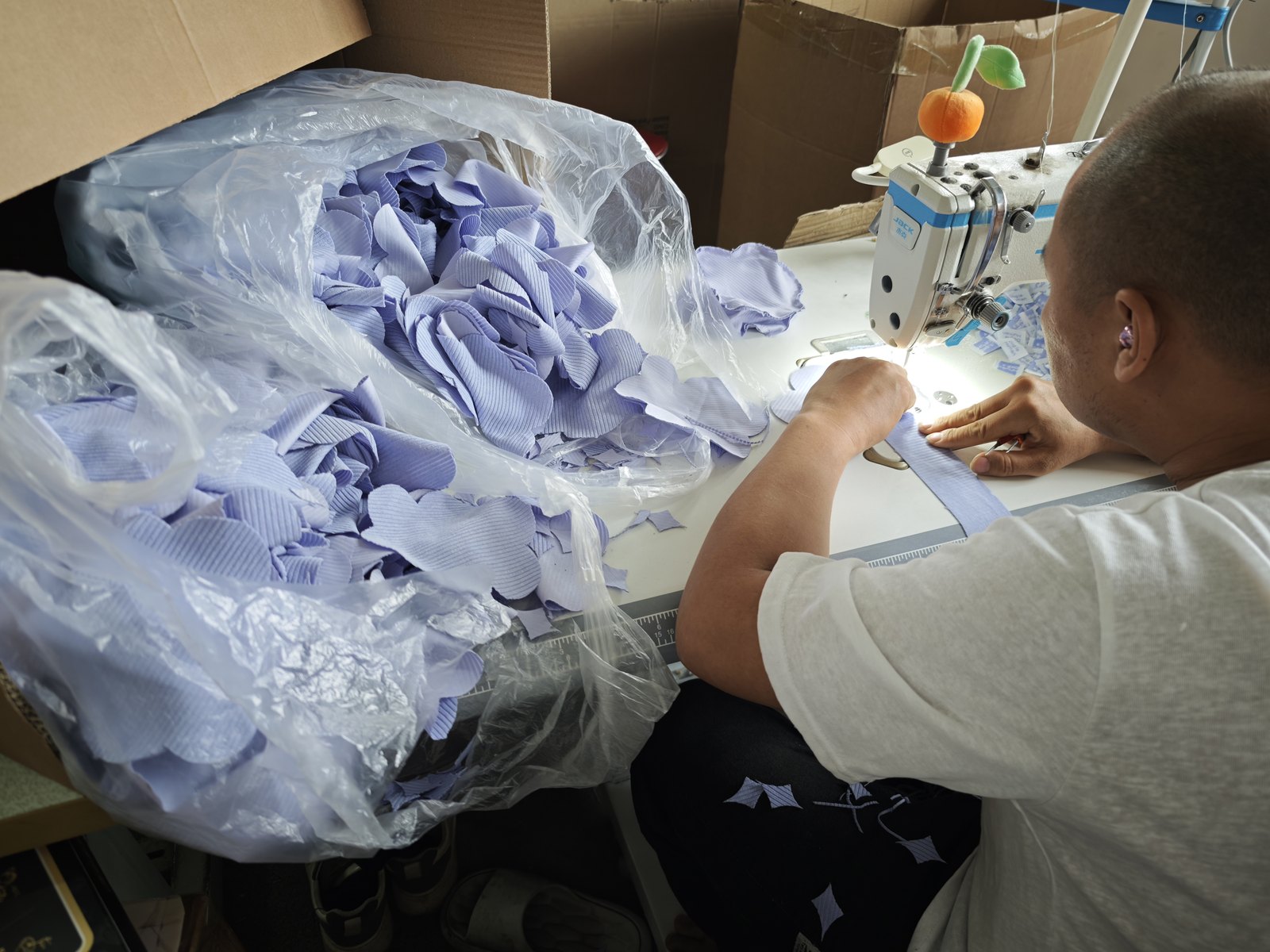
Approved patterns are graded into the ordered sizes, then the plush fabric is cut into panels and batched per order. Bundling pieces by order matters more than it sounds: it keeps fur direction, color dye lots and panel pairing consistent across the whole production run instead of shifting halfway through.
Machine Sewing: Speed, Strength and Consistency
The video above shows the first sewing stage. Most of a plush toy’s total seam length is produced here: body panels, head gussets, limbs and tails all run through straight stitching.
Machine sewing does three things hand work cannot:
- Consistency across thousands of pieces. Once the seam allowance is set and the operator is trained, piece 5,000 comes off the line with the same seam as piece 50. That is what keeps a bulk order looking like one product instead of five slightly different ones.
- Strength where the toy needs it. Body seams on a dog toy take real abuse — tugging, chewing, washing. Machine stitching lets us run reinforced passes on stress seams instead of relying on a single row.
- Schedule control. Machine output per day is predictable, which is what makes a promised lead time credible.
Hand Sewing: Finishing What Machines Cannot Reach
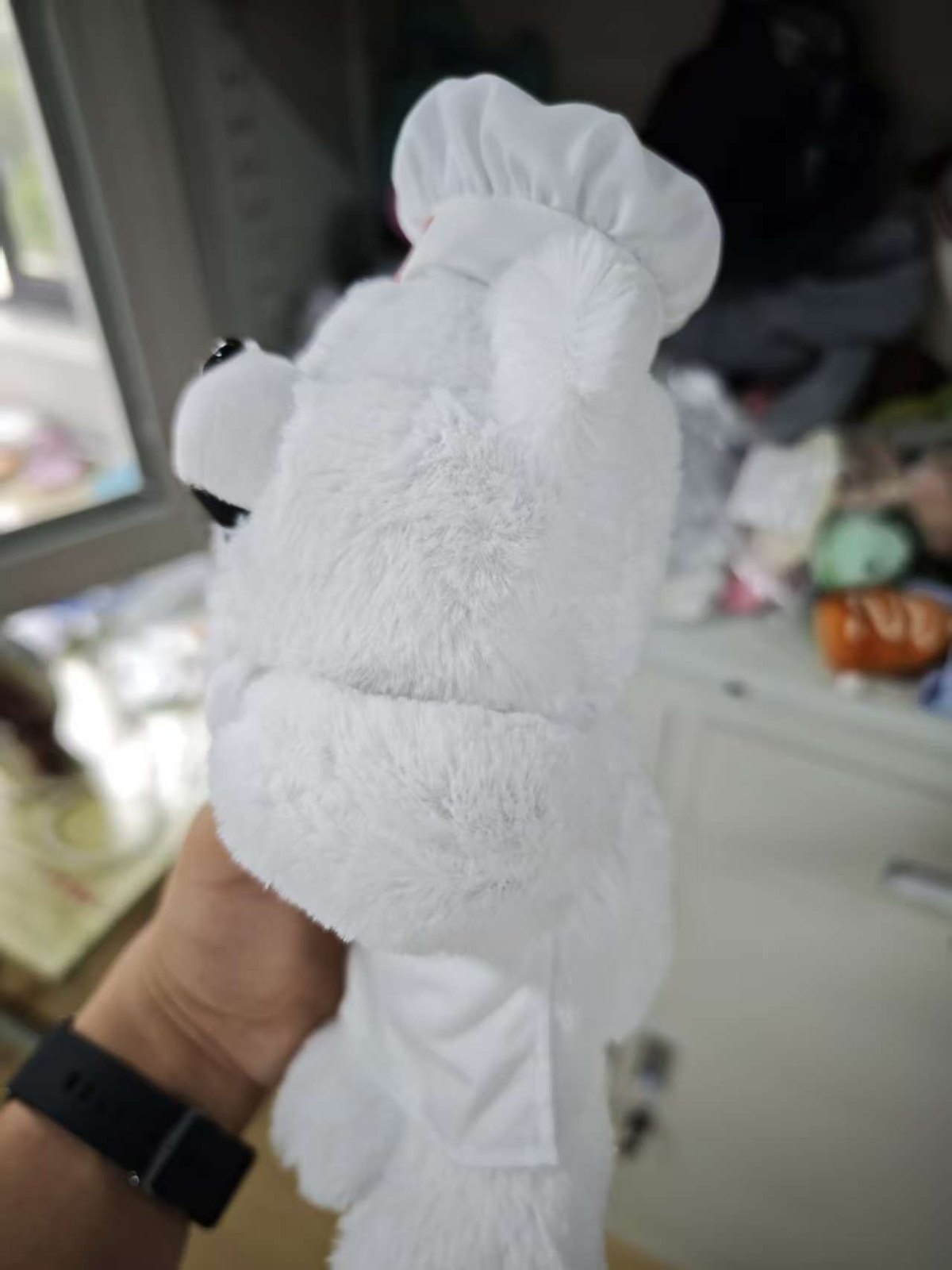
The second video shows the stage buyers rarely see: closing the toy. After the cover is turned right-side-out and stuffed, the opening used for filling has to be closed — and this is done entirely by hand with a ladder stitch that disappears into the plush.
Hand sewing takes over wherever a machine cannot follow the shape:
- Closing the stuffing opening. A machine stitch here would show and create a rigid line on a soft surface. A hand ladder stitch pulls the seam closed from inside and becomes invisible once the fibers are brushed over it.
- Positioning parts. Ears, limbs, tails and accessories are attached or anchored by hand so the symmetry matches the approved sample, not just the pattern.
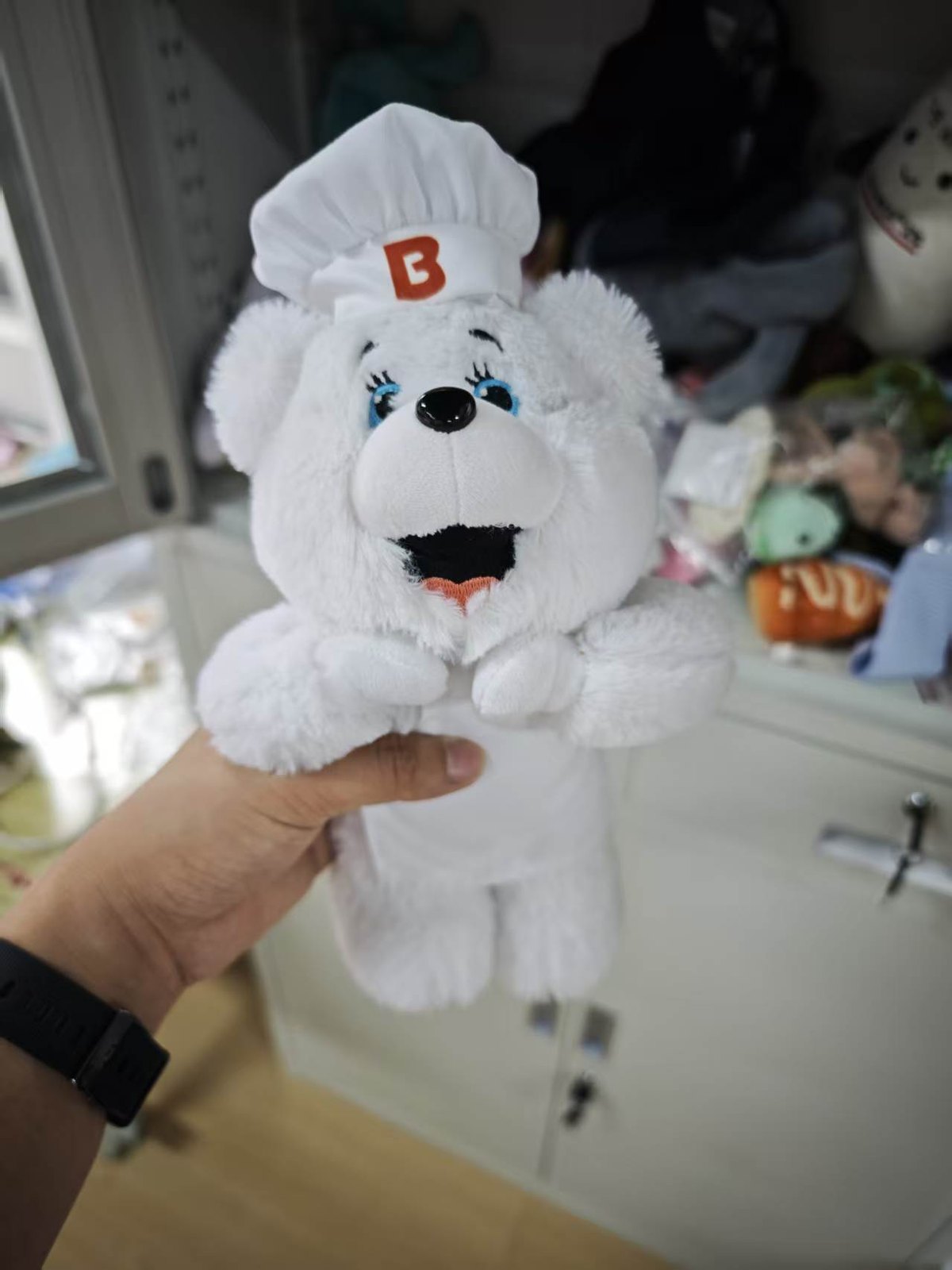
- Shaping and detail work. Sculpted faces, sewn-in expression lines and small decorative elements are all hand work. This is also where a chef hat, a bow or a brand accent gets placed exactly where the customer approved it.
Machine vs Hand Sewing at a Glance
| Production step | Method | Why |
|---|---|---|
| Body panels and gussets | Machine | Long straight seams, strength, batch consistency |
| Stress-point reinforcement | Machine | Repeatable reinforced passes on high-tension seams |
| Closing the stuffing opening | Hand | Invisible ladder stitch on a soft surface |
| Attaching ears, limbs and tails | Hand | Symmetry matched to the approved sample |
| Faces, details and brand accents | Hand | Shape control the machine cannot follow |
What Buyers Should Check Before Placing an Order
Sewing quality is easy to test on a sample, and worth doing deliberately:
- Pull test the seams. Stress seams on the body and limbs should hold firm tugging without opening.
- Find the stuffing opening. Run a finger along the seam: on a well-finished toy it is genuinely hard to locate.
- Compare pieces. On a bulk order, check several pieces from different cartons — seam lines, fur direction and proportions should be identical.
- Check small parts. Ears, eyes and accessories should be anchored so they cannot be pulled off, especially on dog toys.
Frequently Asked Questions
Are your plush pet toys machine sewn or hand sewn?
Both. Machine sewing builds the main structure; hand sewing closes the stuffing openings, positions parts and finishes details. Every toy we ship has gone through both stages.
Can you match the stitching on my existing sample?
Yes. Send us the sample and we reverse-engineer the pattern, seam allowances and finishing methods, then confirm everything on a counter-sample before production starts.
Does hand sewing slow down bulk production?
The hand-finishing steps are planned into the production schedule from the start, so they add craft without breaking the lead time. What actually delays orders is discovering rework late — which is why our inline checks happen during sewing, not after packing.
Can I customize the size, fabric and filling?
Yes. Size, fabric, color, filling firmness, squeakers and embroidery are all customizable, starting from your drawing, photo or physical sample.
Get a Sample From Our Workshop
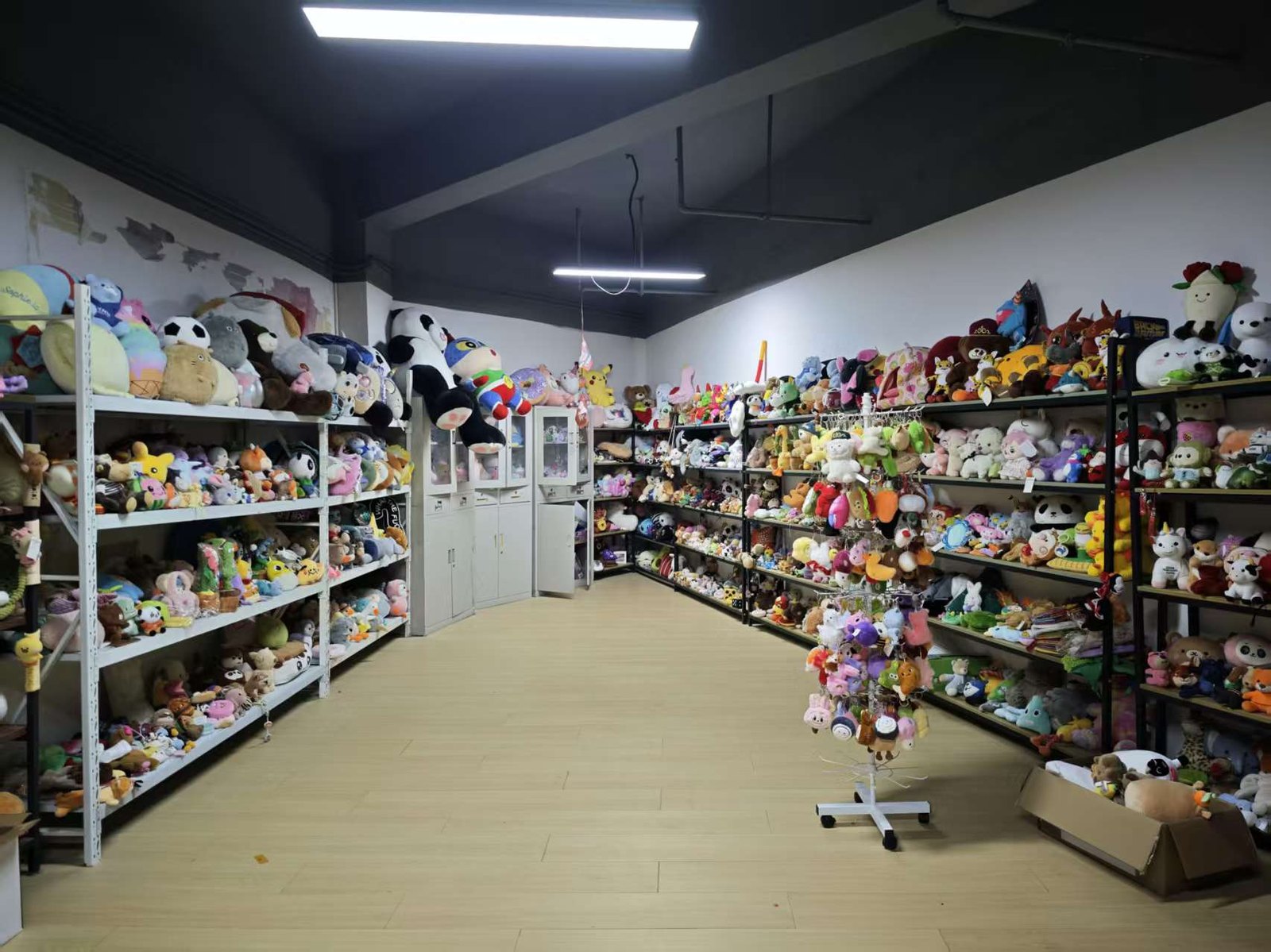
The fastest way to judge sewing quality is to hold the toy. Request a quote or ask for a sample, and we will send you a piece from the same lines shown above.
Related reading: our Custom Plush Dog Toys Wholesale Sourcing Guide covers sourcing, materials and supplier checks for buyers planning a full range.