BUYING GUIDE · 15 MIN READ · UPDATED OCTOBER 2026
Table of Contents
The short answer: a quotation is not a price — it is a spec sheet with a price attached. Two suppliers can quote the same-looking ceramic bowl months apart in cost once you compare what sits behind each number: the price basis (EXW or FOB), the MOQ and volume tier, what the unit price includes and excludes, sampling and tooling costs, payment terms, lead time and quote validity. Read those seven elements in order and almost every difference between competing quotes explains itself. As a rule of thumb: unbranded stock ceramic bowls start at 10 pcs, private label and OEM customization start at 500 pcs, sampling typically takes 1–2 weeks from confirmed specs, and a serious supplier returns a complete quotation within 24 hours.
Buyers often judge a quotation in three seconds: scan the unit price, compare it to the other quotes in the inbox, forward the cheapest one. It is an understandable habit and an expensive one. A ceramic pet bowl quotation is a bundle of commercial commitments — and the unit price is only the most visible line in it. Since 2010 we have quoted and shipped pet feeding products to importers and pet brands in 30+ countries, and the pattern is always the same: the buyers who read quotations line by line negotiate better, get surprised less, and land their products at a lower true cost than the buyers who chase the lowest number. This guide walks through a quotation the way a sourcing manager does, element by element.
Section 1/9What a Quotation Actually Is — and Why Quotes Differ
A quotation is the supplier’s written offer to produce a defined product, in a defined quantity, under defined commercial terms, at a defined price. Every word in that sentence matters, because when any one of them is left vague, the price stops being comparable. Why do two quotes for “a ceramic dog bowl” differ by 40%? Usually one of these:
- Different specifications. Wall thickness, foot ring design, glaze quality, whether a metal stand is included — ceramics vary enormously under similar photos. One quote may describe a 400 g bowl, the other a 900 g one.
- Different price bases. One price is EXW the factory gate, another is FOB the port, a third quietly includes freight to your door. Comparing them directly compares different things.
- Different order quantities. A price quoted at 500 pcs is not the price you will pay at 3,000 pcs — and a supplier quoting a low price against a 5,000-pc MOQ may be more expensive for you at your real volume.
- Different inclusions. Sampling, tooling, packaging design, testing copies and carton data may be included in one quote and billed separately in another.
So the first skill in reading a quotation is not judging the number — it is judging whether the quotation gives you enough information to compare fairly. The next section shows what that looks like.
Section 2/9The Anatomy of a Complete Quotation
A quotation you can act on states every line below. If one is missing, ask for it before you compare — each gap is a place where cost or risk hides.
| Quotation Line | What It Should State | What to Ask If It Is Vague |
|---|---|---|
| Product specification | Material, dimensions, weight, capacity, glaze color, stand or accessories, packaging type | “Exactly which sample does this price describe?” |
| Unit price and currency | Price per piece or per set, currency, and whether it is per size or blended | “Is this per bowl, or per bowl-and-stand set?” |
| Price basis | EXW, FOB or another Incoterm, with the named port or place | “FOB which port?” — freight from different ports differs |
| MOQ and tiers | Minimum order quantity and unit price at 500 / 1,000 / 3,000 pcs and up | “What is the price at my actual quantity?” |
| Inclusions and exclusions | Whether retail packaging, barcode labels, inserts and artwork work are inside the price | “What would make this price move?” |
| Sampling and tooling | Sample cost, sample lead time, any mold or setup fee and whether it is refundable | “Is the tooling fee one-off or per order?” |
| Payment terms | Accepted methods and the deposit / balance split | “What split applies at my order size?” |
| Lead time | Sampling time and production time in working days, counted from what trigger point | “From deposit, from sample approval, or from artwork sign-off?” |
| Validity | How long the price holds, and what would trigger a re-quote | “If I confirm within the validity window, is the price locked?” |
Notice what this table really says: most quotation problems are specification problems in disguise. A quote that names its sample, its price basis and its trigger points can be executed exactly as written; a quote that is a single number cannot. If you are still choosing what to quote in the first place, our material comparison guide covers how ceramic, stainless steel and melamine differ on cost structure — differences that show up directly in the quotation.
Section 3/9MOQ and Volume Pricing Tiers
The MOQ line tells you which commercial ladder you are climbing, and the tier structure tells you what your next order saves. In ceramic pet bowls the structure is usually three rungs:
| Order Type | What You Bring | MOQ | Where the Cost Sits |
|---|---|---|---|
| Stock bowl, unbranded | Nothing — choose from existing glazes and sizes | 10 pcs | Product cost only; standard export packaging included |
| Private label / OEM | Logo artwork, custom glaze or decal, retail packaging design | From 500 pcs | Sample and possible setup costs, then a lower unit price at volume |
| ODM (new mold / new shape) | Product brief — sketches, dimensions, target market | Quoted per design | Mold and development costs, amortized in the quotation |
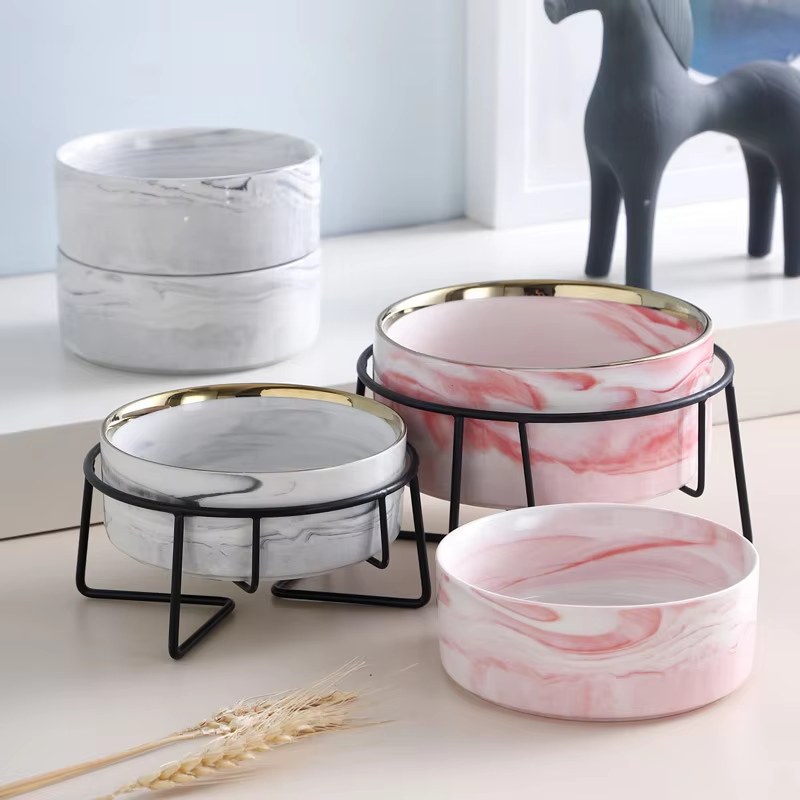
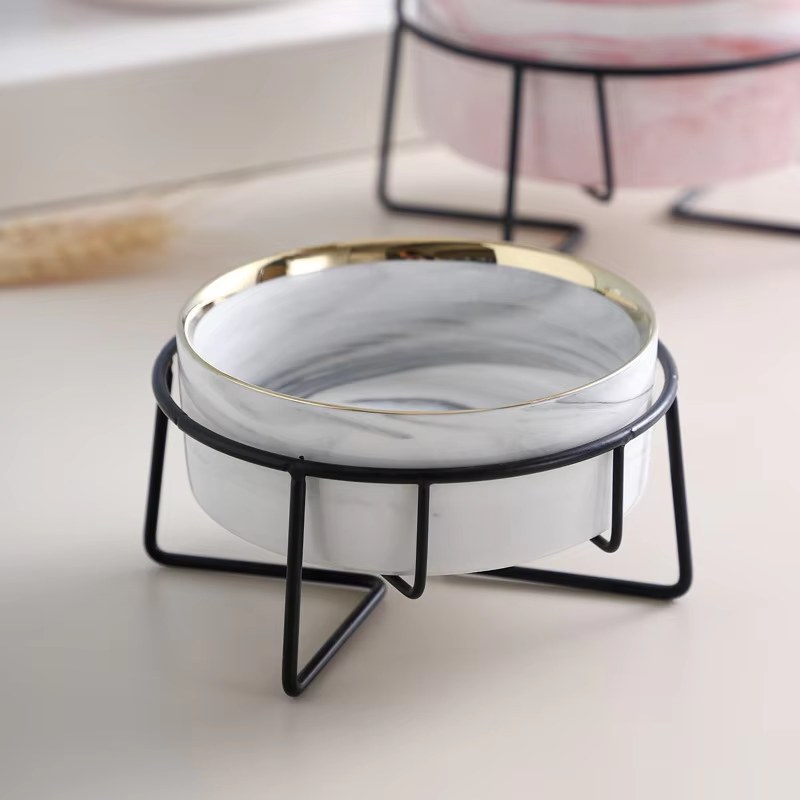
Read the tier table together with the MOQ, not after it. A quotation that only shows one price tells you nothing about what 2,000 pcs buys you; a quotation with a tier table lets you plan two orders ahead. A practical habit: ask the supplier to state the unit price at your trial quantity and your target quantity side by side. If the gap is small, your leverage is in consolidating SKUs; if it is large, you may want to reach the next tier earlier. The 10-piece stock tier exists precisely so you can validate a design on real shelves before committing to customization — put a marble ceramic double bowl with metal stand and a bamboo-fiber eco bowl in the same test order and let sell-through decide which one earns the 500-pc private label run.
Section 4/9Sampling, Tooling and Setup Costs
Sampling is where quotations become real. The sample is the physical contract: what you approve is what production is measured against, so the quotation should state exactly what the sample covers and what it costs.
- Stock samples — existing bowls in existing glazes — are typically free; you cover the courier. This is the cheapest possible way to judge glaze quality, weight and finish before any custom spend.
- Custom samples — your decal, your glaze color, your packaging mock-up — are quoted case by case, because the work behind them varies. A good quotation says so explicitly instead of hiding the cost inside an inflated unit price.
- Tooling and setup applies when your design needs a new mold, a new decal screen or custom packaging plates. The quotation should split it out as a one-off line — and state whether it is amortized into the unit price or billed separately.
- Sample lead time for ceramic customization is typically 1–2 weeks from confirmed specifications. “Confirmed” is the operative word: sampling clocks start when specs, artwork and references are agreed, not when the inquiry is sent.
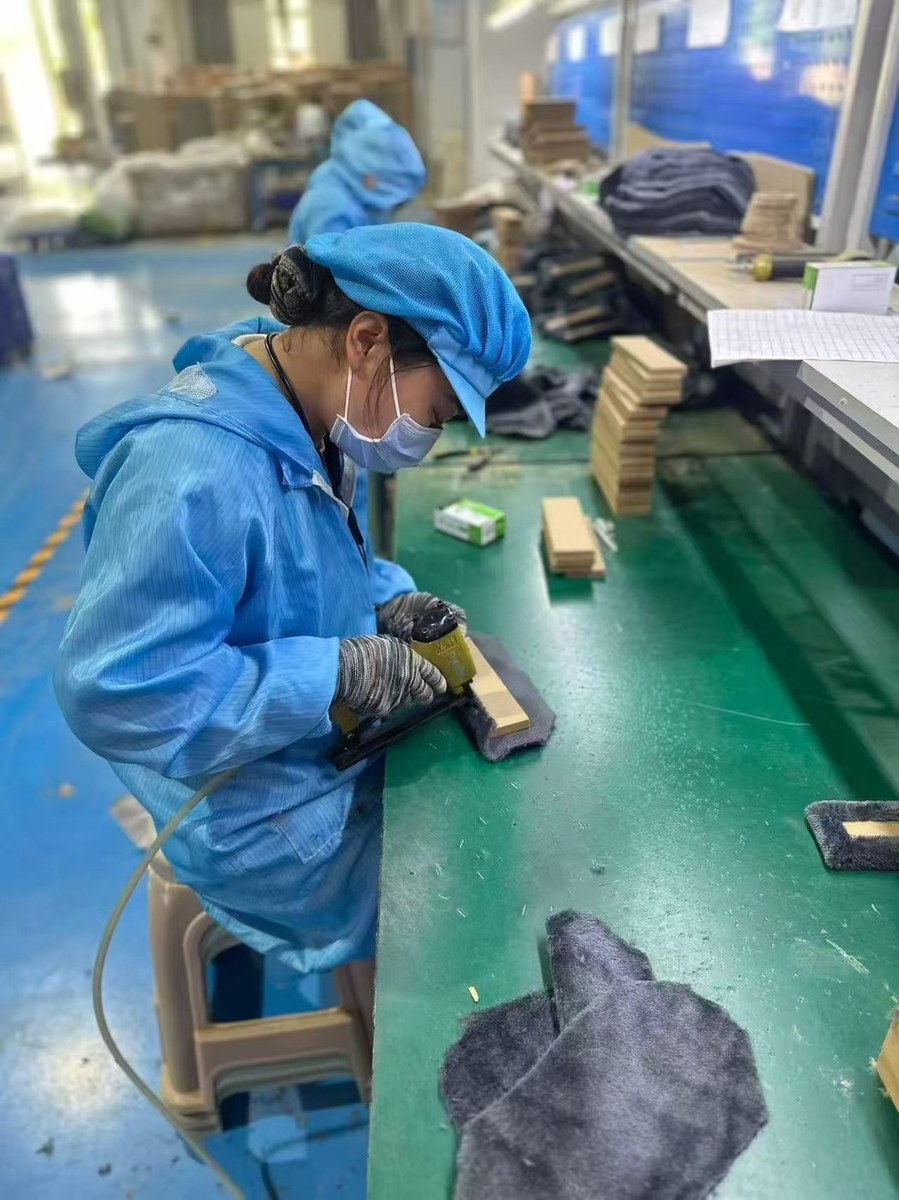
One more reading skill: watch how the quotation treats the golden sample. A well-built quotation references it — “production per approved golden sample, ref. XX” — which ties the price to a physical object both parties hold. If the quote instead references only a photo or a model number, ask for the golden-sample clause before you pay a deposit. If your customization route is still undecided, the private label vs OEM vs ODM guide maps which of the three needs which kind of sample.
Section 5/9Payment Terms Decoded
Payment terms define when cash leaves your account relative to when goods leave the factory — which makes them a risk-management tool, not an accounting detail. The common options in this category:
| Payment Term | How It Works | Typical Use | Risk Balance |
|---|---|---|---|
| T/T (bank transfer) | Deposit before production, balance before or against shipment | The default for most custom orders | Shared — buyer pays ahead, supplier carries production risk |
| L/C (letter of credit) | Your bank guarantees payment against shipping documents | Larger orders where both sides want bank-grade assurance | Balanced — banks verify documents on both ends |
| PayPal | Card-linked online payment, fast to execute | Samples and small trial orders like a 10-pc stock run | Buyer-friendly; suited to low amounts |
| Credit card | Direct card payment through the supplier’s processor | Small orders and first-time tests of a new supplier | Buyer-friendly; chargeback protection on small sums |
How to read the payment line in a quotation: look for the split (a common structure is deposit with order, balance against copy of shipping documents), look for which methods are accepted at your order size — PayPal makes sense on a 10-pc trial, not on a container — and look for consistency with the lead-time line, because production starts on receipt of the deposit, so the deposit date anchors the whole schedule. A quotation that names its accepted methods (we accept L/C, T/T, PayPal and credit card) and its split in writing is one you can plan cash flow around; one that says “payment negotiable” will turn negotiation into your project schedule.
Section 6/9Lead Times, Validity and Landed Cost
Three time-related lines sit near the bottom of every good quotation, and buyers who skim them pay for it later:
- Response and quote time. A supplier’s quotation response speed is a preview of its project management. Standard practice is a complete quote within 24 hours of receiving your specification — incomplete specs are the usual reason a quote takes days.
- Production and shipping time. In-stock items ship in about 7 days; customized production lead time should be stated in writing in the quotation, with its trigger point (deposit received, sample approved, artwork signed off). For ceramics, ocean freight planning matters as much as production — the export carton data guide shows how pieces per carton, CBM and gross weight convert your unit price into freight per bowl.
- Quote validity. Ceramic inputs — clay, glaze materials, energy and freight — move, so prices are quoted with a validity window. Confirm the window in writing, and confirm that confirming inside the window locks the price.
The landed-cost frame ties these together: unit price + freight + duties + handling = what each bowl really costs you. A quotation that supplies carton data lets you compute freight per unit yourself; one that does not leaves you quoting your forwarder blind. If you are weighing shipping routes and Incoterms for the first time, our upcoming guide on FOB, EXW and DDP walks through each basis in detail.
Section 7/9Red Flags to Watch For
Most problematic quotations announce themselves early. These patterns deserve a second look before you commit:
- A price with no specification. If the quote does not name weight, dimensions and glaze, the price describes nothing. You will re-quote the moment specs are real.
- No price basis. A number without EXW/FOB and a named port cannot be compared to anything — and invites surprise freight invoices.
- Silent exclusions. Packaging, labels and artwork “to be confirmed” after the deposit is the classic pattern; ask for inclusions in writing.
- Tooling ambiguity. If a mold or setup fee exists but is neither itemized nor explained, you cannot tell a one-off investment from a per-order charge.
- No validity window. An open-ended price is a price that can move; serious quotes carry a date.
- Unwillingness to reference the golden sample. If production terms do not tie to an approved sample, you lose your objective quality benchmark — this is the single most important clause in a custom ceramics order.
None of these means the supplier is bad — sometimes a first reply is just a quick draft. But each one is a question you ask before the deposit, not after. A supplier who answers them precisely in a revised quotation is showing you how they will run your production.
Section 8/9Compare Quotes Like a Buyer: The Checklist
Before you place two quotes side by side, put each through the same eight checks:
- Specification named — weight, dimensions, glaze, stand, packaging.
- Price basis stated — EXW or FOB, with the named place.
- MOQ and tier table present — including the price at your real volume, not just the minimum.
- Sample terms clear — cost, lead time, and the golden-sample production clause.
- Payment methods and split written down — matched to your order size.
- Lead time with trigger point — and carton data for freight planning.
- Validity window dated.
- Supplier fundamentals visible — a factory you can verify: years in the category, markets served, and company-level quality systems such as ISO 9001 and BSCI audited supply chains, with FDA food-contact compliance relevant to glaze and material selection. Ask which systems the quotation is produced under; a factory that keeps production, QC and packing under one roof can tie every line to its own process.
Then compare on landed cost per sellable bowl, not on unit price — the quote that looks 8% higher can easily land 5% cheaper once freight, damage rate and re-work risk are counted. If you want to see what a complete quotation looks like in practice, send us your specs and compare our reply against the checklist above. Browse the full feeding range in Bowls & Feeders for Dogs and Bowls & Feeders for Cats, including a plastic slow-eating dish, a fish-shape silicone lick-mat bowl, a leakproof travel drink cup and a custom-logo double-wall steel bowl — a mixed sample order is the fastest way to calibrate what each material’s price buys.
Section 9/9FAQ
Quick answers to the questions buyers ask most about reading ceramic pet bowl quotations.
What should a complete ceramic pet bowl quotation include?
Seven elements: a named product specification (material, dimensions, weight, glaze, accessories, packaging), the unit price with currency, the price basis (EXW or FOB with a named place), the MOQ with volume tier prices, sampling and tooling terms, payment terms with the deposit split, and lead times with a trigger point plus a validity window. If any line is missing, ask for it before comparing quotes.
Why do quotations for similar bowls differ so much between suppliers?
Usually because the offers are not actually for the same product or the same terms: different wall thickness and weight, different glaze quality, different price bases (EXW vs FOB vs including freight), different quantities and different inclusions. Normalize the specification, quantity and Incoterm first — then the remaining price difference tells you something real about the factory.
What MOQ can I expect when ordering ceramic pet bowls?
Unbranded stock bowls typically start at 10 pcs so you can test a design with minimal commitment. Private label and OEM customization — logo decals, custom glazes, retail packaging — generally start from 500 pcs. ODM projects with a new mold are quoted per design, with tooling and development costs stated separately in the quotation.
How long does sampling take, and what does a sample cost?
Stock samples are usually free apart from the courier cost. Custom samples are quoted case by case depending on the work involved, and sampling typically takes 1–2 weeks from confirmed specifications. The quotation should state both the cost and the clock: what triggers the sampling period, and what the sample must be judged against.
Which payment terms are standard for ceramic pet bowl orders?
T/T bank transfer with a deposit-plus-balance split is the default for production orders; L/C suits larger orders where both sides want bank involvement; PayPal and credit card are practical for samples and small trial orders such as a 10-pc stock run. The quotation should name the accepted methods and the exact split for your order size.
How long is a supplier quotation valid?
Validity windows vary by supplier and by material cost movement, and a good quotation states its own window explicitly. Confirm two things in writing: how long the price holds, and that confirming the order inside the window locks the price. If your project will outlast the window, ask for a re-quote trigger definition rather than an open-ended price.
Request a Quotation
Send your specification — or just a reference photo and your target quantity — and receive a complete, itemized quotation within 24 hours: unit price and tiers, MOQ, sampling terms, payment options and lead times, all in writing. Stock samples are free; a 10-pc trial order ships in about 7 days.
Request a QuoteAsk for a Free Sample
Email: support@timopet.com · WhatsApp: +86 153 5610 2970